Background: the companies behind the schemes
This section gives you a brief background on each PMS provider - how long they have been around, where they come from and how their systems have evolved over time.
Lyra
Lyra is a new Swedish operator launched in 2025 after previously operating under the name Modular Visit. The company was founded in 2023 by an experienced team in hotel and system development, with offices in Stockholm, Gothenburg and Östersund. Lyra is built from the ground up as a modern platform that combines several systems into one - not only a PMS but also a POS system, booking engine, channel manager and CRM in a holistic solution. Although relatively new to the market, Lyra has quickly attracted attention by challenging old ways of working and delivering an innovative all-in-one solution for hotels and other accommodation providers.
VisBook
VisBook is a veteran among Nordic PMS systems. The company started back in 1995 in Norway, founded by developer Øystein Selbekk together with a campsite owner who needed a simpler booking system. Under the name Reiselivsdata, they started early with cloud services (already in 1998) and later changed their name to VisBook. Over the years, VisBook has grown methodically and expanded its functionality step by step. Today, they have over 900 customers, mainly in the Nordic region but also internationally. In 2019, VisBook got new owners and invested in modernising the brand and strategy. Despite over 25 years on the market, VisBook continues to develop and has strengthened its position as a leading Nordic supplier of hotel systems.
Comers
Comers is a Swedish booking system that has existed since 2002. The system was developed by the company Transitor AB and is based in Stockholm. From the beginning, Comers focused on the entire travel industry with a flexible platform that could handle everything from hotels and campsites to cottage agencies, adventure parks and ski resorts. Over the years, Comers has broadened its customer base (today over 70 establishments) and constantly updated the system to meet new demands for digitalisation. Comers has profiled itself as a modern web-based solution for businesses that want to be at the forefront, and is now part of the integration offer of the restaurant system company Trivec. Through integrations and a wide range of functions, Comers has evolved from a pure booking engine to a comprehensive PMS for the tourism and hotel sector.
Clock PMS+ (Shiji)
Clock Software was an early pioneer in cloud-based hotel systems. Originally founded in Bulgaria, the company launched its Clock PMS cloud platform around 2012, with the vision of eliminating the need for local servers. In 2022, Clock was acquired by the global technology group Shiji Group. The acquisition has given Clock the financial stability and muscle to develop further in a global market. Today the system is marketed as Clock PMS+ and is known to be one that seeks to reduce the number of integrations a hotel needs to run its business.
Mews
Mews is an international start-up that has quickly become one of the most talked about cloud-based hotel systems. The company was founded in 2012 by hotel entrepreneur Richard Valtr with the vision of creating the hotel platform of the future. Headquartered in Amsterdam (originally started in Prague), Mews has expanded globally with thousands of customers. Thanks to significant investment and rapid innovation, Mews has evolved into a comprehensive SaaS solution. The system has won several awards and is used by many modern hotels, from independent boutique hotels to major chains. For example, a major Nordic hotel chain has recently started implementing Mews in its properties, demonstrating that Mews can now also meet the needs of larger operators. Mews' philosophy is to offer an open, automated PMS that is constantly improved with frequent updates.
HotSoft (Hoist/Planet)
HotSoft is a well-known hotel management system developed by the Swedish Hoist Group since the early 2000s. HotSoft (also known as HotSoft 8 in its latest version) has been used by countless hotels across Europe, especially in the medium-sized hotel and conference centre segment. Founded in 1994, Hoist Group delivered not only PMS but a whole ecosystem of hotel solutions (e.g. key card systems, TV solutions, Wi-Fi). HotSoft has therefore always been highly integrated with other hotel management systems. In 2021, Hoist Group became part of the company Planet, which has led to HotSoft now being marketed under the Planet brand in certain contexts. Despite the change of ownership, HotSoft retains its core: a scalable PMS with a modular structure that can be customised to the hotel's needs. The system is over 20 years old but is continuously updated to meet modern requirements, including cloud computing and new integrations.
Oracle Opera
Oracle Opera is perhaps the most classic PMS in the global hospitality industry. Opera originated from the legendary Fidelio system launched in the 1980s. Opera PMS in its current form was released around 2000 by Micros-Fidelio and became standard in many major hotel chains worldwide. In 2014, Micros (and thus Opera) was bought by the US company Oracle, which has been driving development ever since. Known for its extensive functionality, Opera has been the first choice for large full-service hotels, luxury hotels and chains that require robust centralised management. In recent years, Oracle has launched Opera Cloud, a cloud-based version of the system, to keep pace with the industry's shift to SaaS. Opera has evolved over the decades from DOS-based systems to a modern platform alternative, but carries with it the legacy of being one of the most proven PMSes in history.
Sirvoy
Sirvoy is a Swedish supplier that primarily targets smaller hotels, B&Bs and hostels. The company was founded in 2008 when three brothers developed a simple booking system for their mum's hostel in Hjo. What started as a family solution has grown organically over 17 years into a global platform that is now used in over 140 countries. Sirvoy has always stuck to the basic idea: simplicity, clarity and reliability for the individual hotelier. Today, Sirvoy offers a complete cloud-based system with an integrated booking engine and channel manager for a fixed monthly fee. The company is headquartered in Ireland but retains its Swedish flavour in corporate culture and support. Over the years, Sirvoy has expanded without taking in venture capital, earning it a reputation for stability and customer focus. The long journey from the hostel in Hjo to thousands of customers globally demonstrates Sirvoy's ability to meet the needs of small players in the industry.
Functionality and targeting
All these PMS systems cover basic needs such as room booking, guest registration and billing. However, they differ in their functionality, specialisations and the type of customer they primarily address. Below we summarise the key features and focus of each system.
Lyra
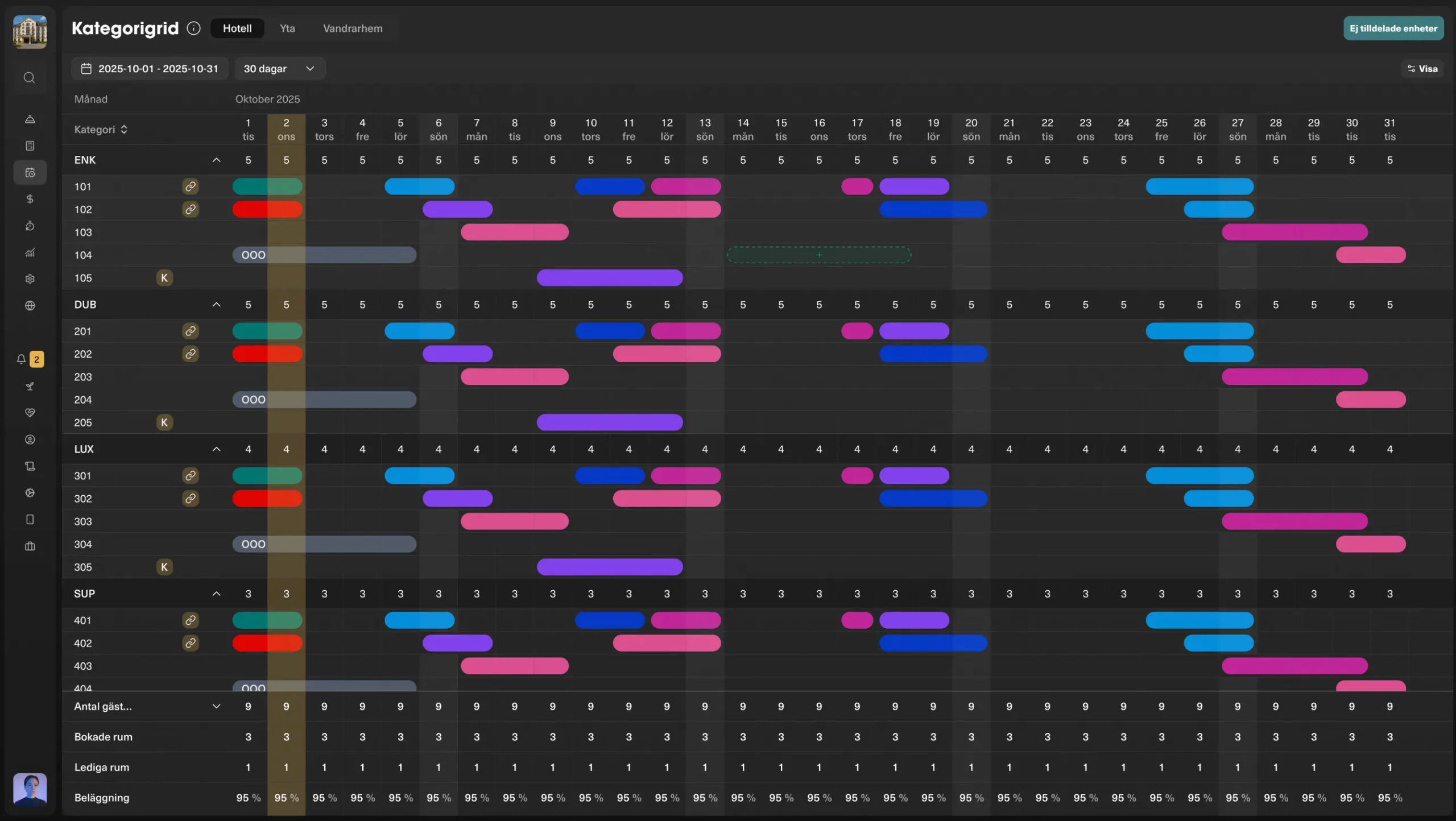
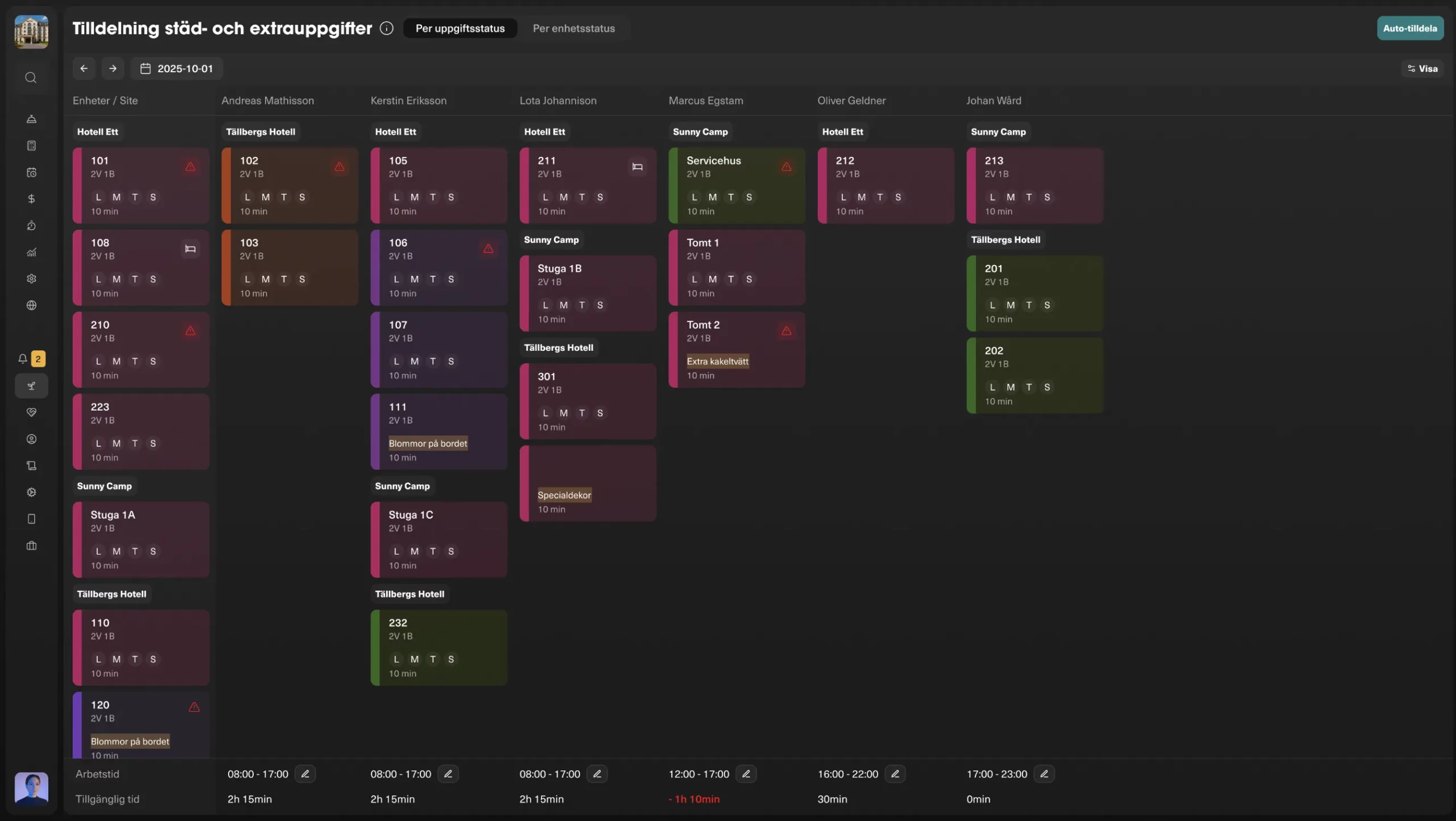
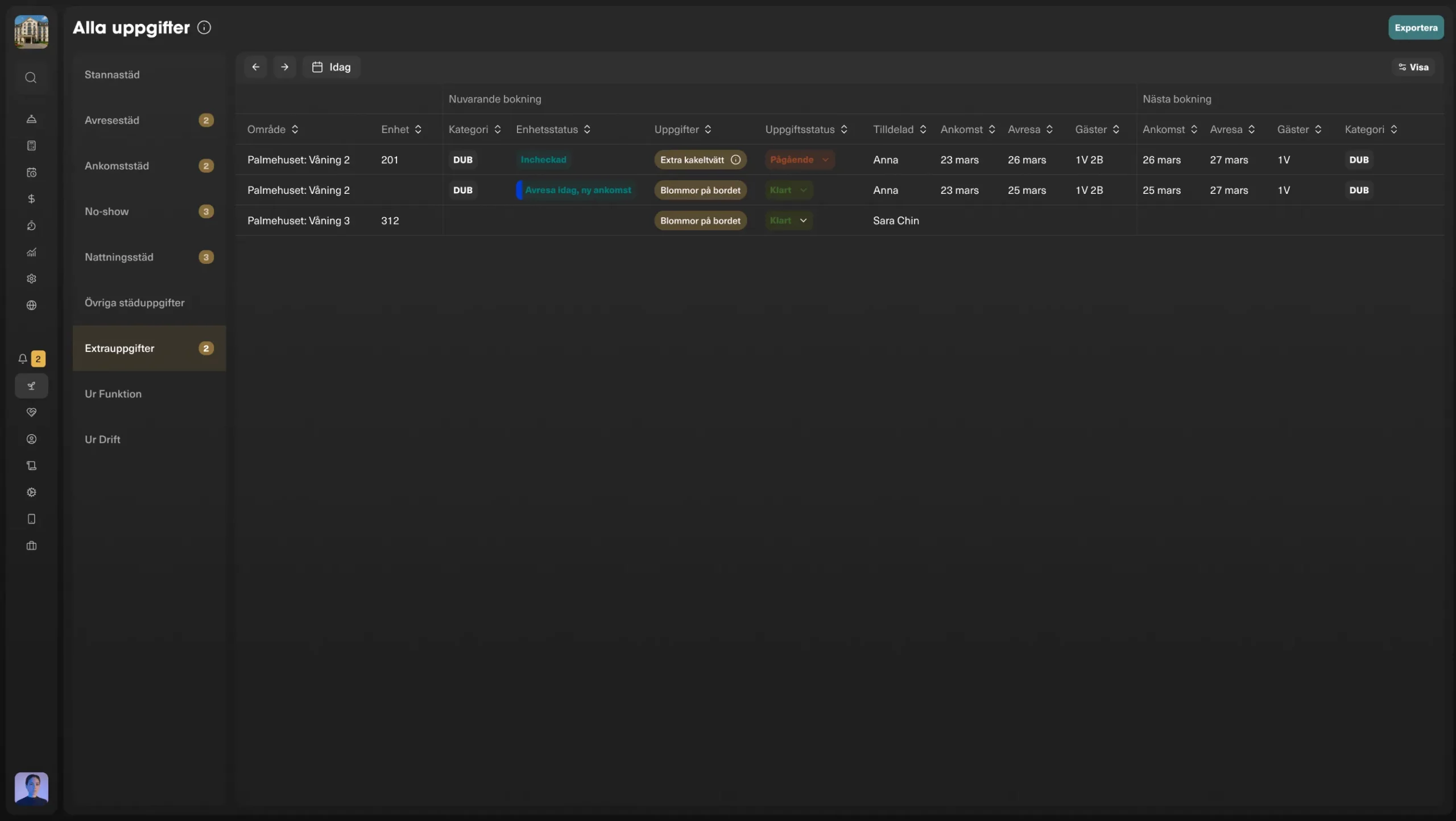
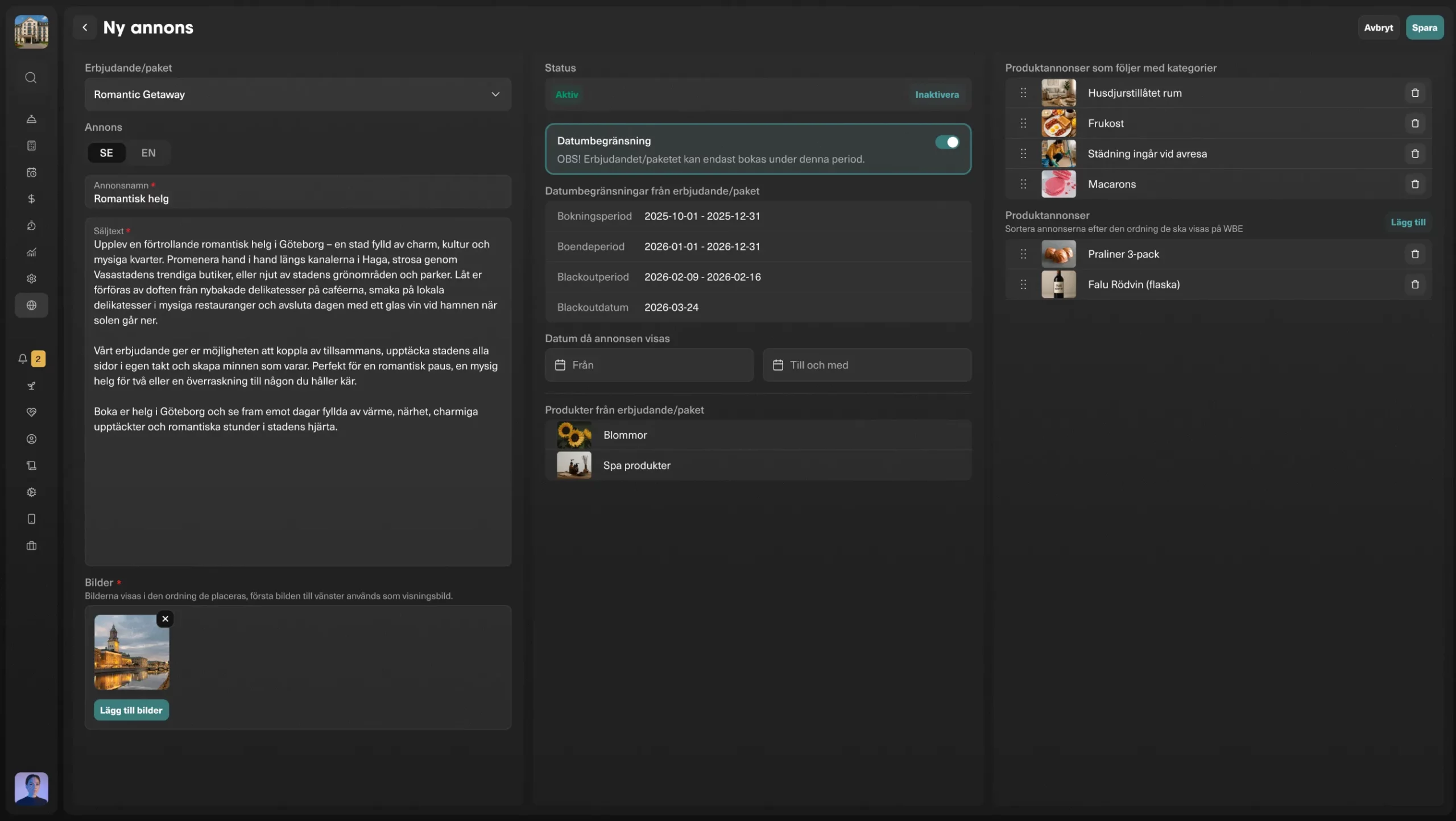
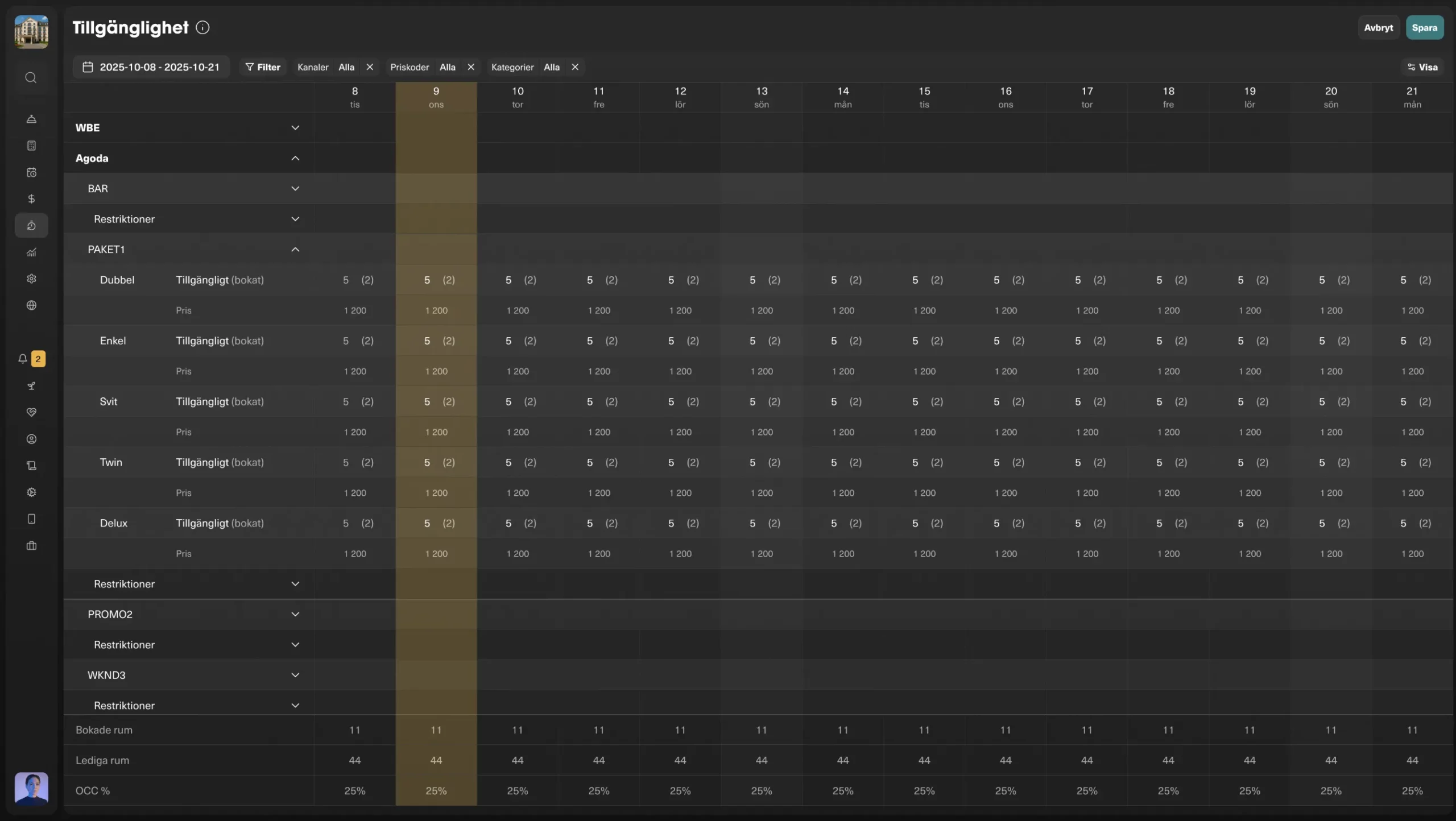
An end-to-end platform that combines multiple systems. In addition to the core PMS, it also includes a point-of-sale (POS) system, a web-based booking engine (WBE) for direct bookings, an inbuilt channel manager for OTAs and a CRM for guest data. Lyra is fully cloud-based and designed to be intuitive with a modern interface. The system supports multiple business types (hotels, camping, hostels, etc.) via modular customisations, allowing the features to be scaled up or down depending on the size of your establishment. The focus is on providing an "all-in-one" system where all parts talk to each other - from booking and price management to cleaning and payments.
VisBook
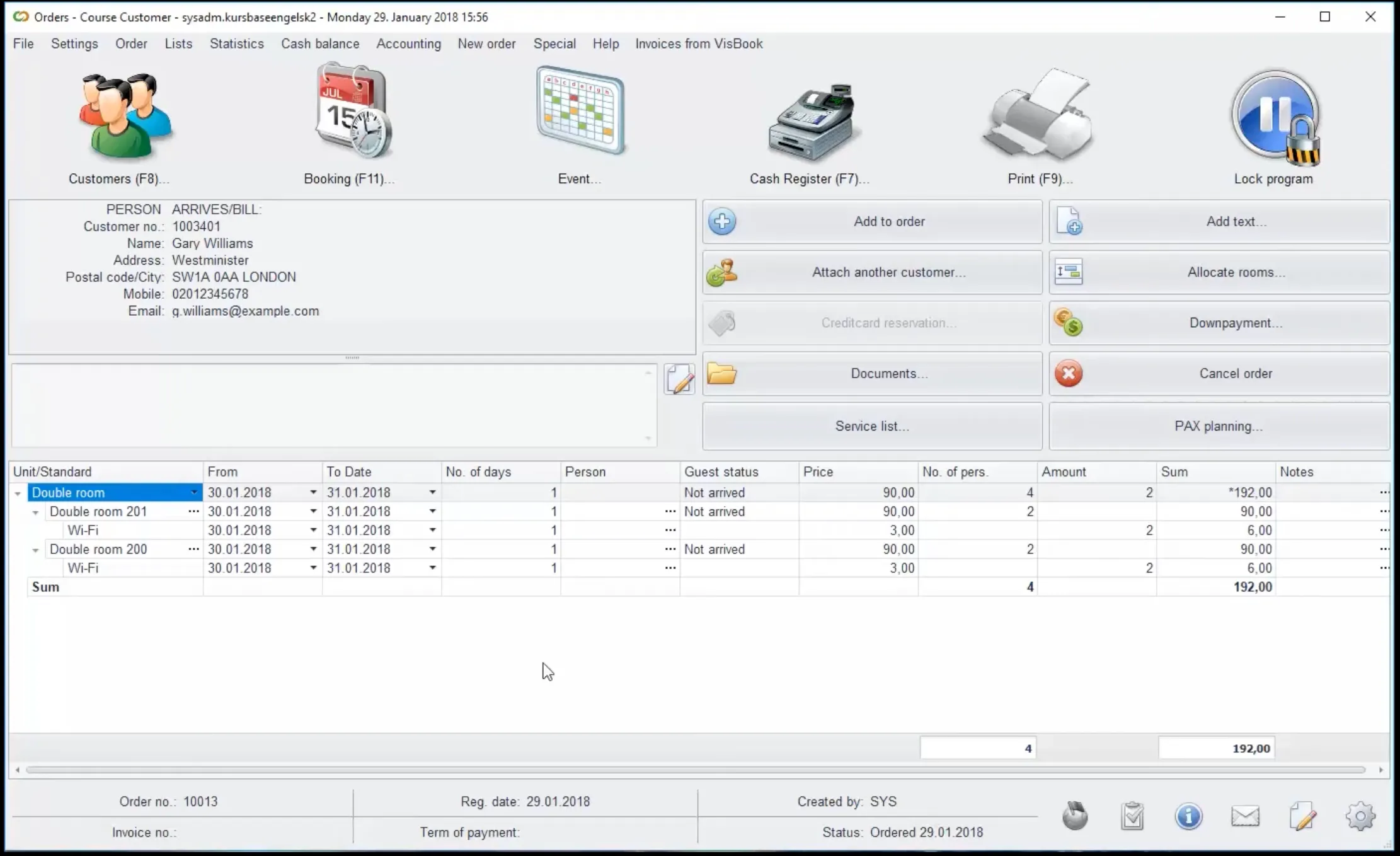
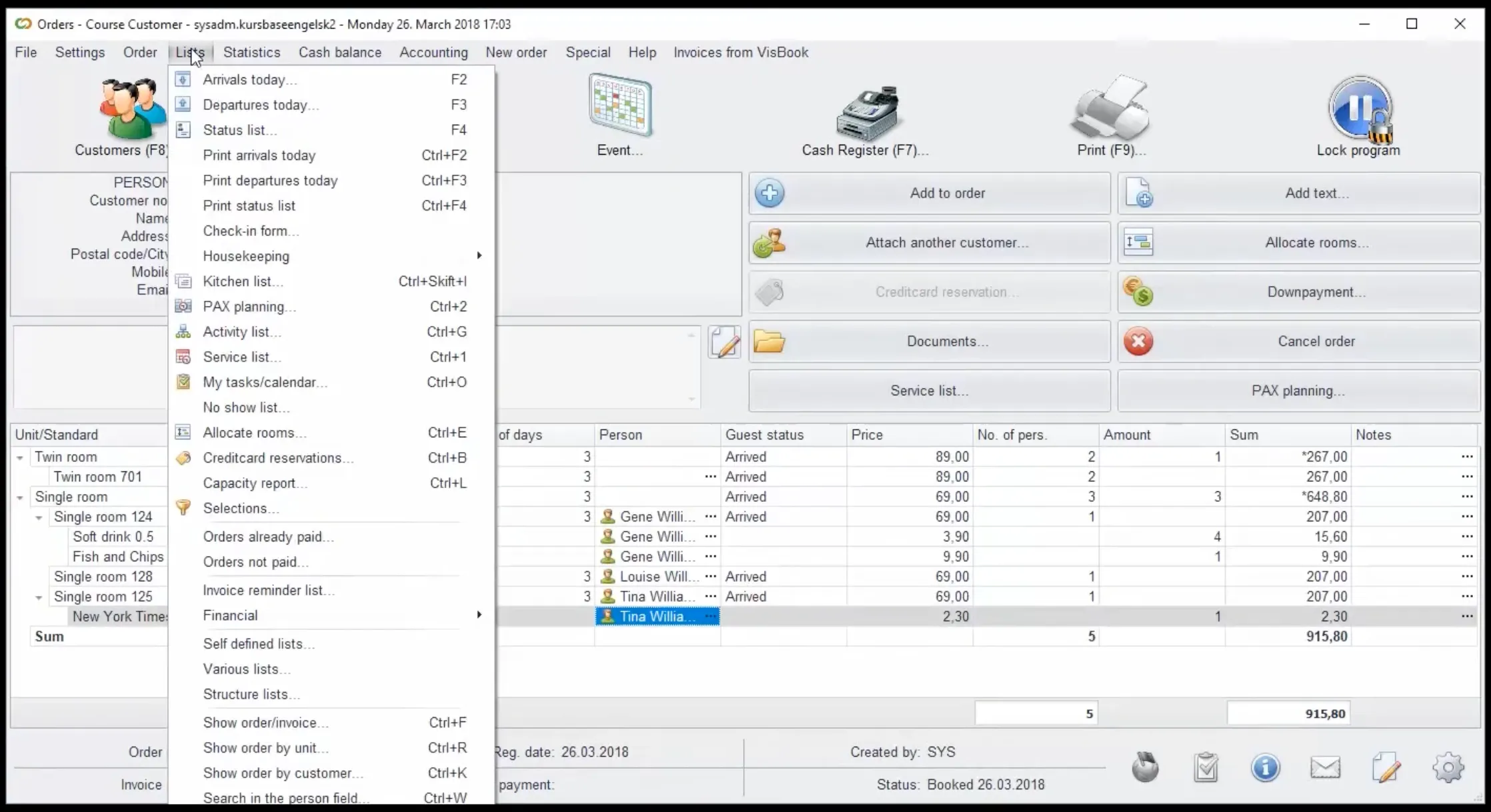
A hospitality management system (PMS) that today is a central part of Visit Group's product portfolio, rather than a standalone "all-in-one" platform. VisBook offers modules for booking & reception, housekeeping, restaurant, spa, conference and chain management, but many peripheral functions are in practice managed via separate solutions and integrations within the Visit Group ecosystem. Thanks to its roots in camping and tourism, VisBook still supports, for example, camping pitches, rentals and activity bookings in addition to classic hotel needs. The target audience ranges from campsites and resorts to independent hotels that want a feature-rich PMS while being able to combine it with other specialised tools.
Comers
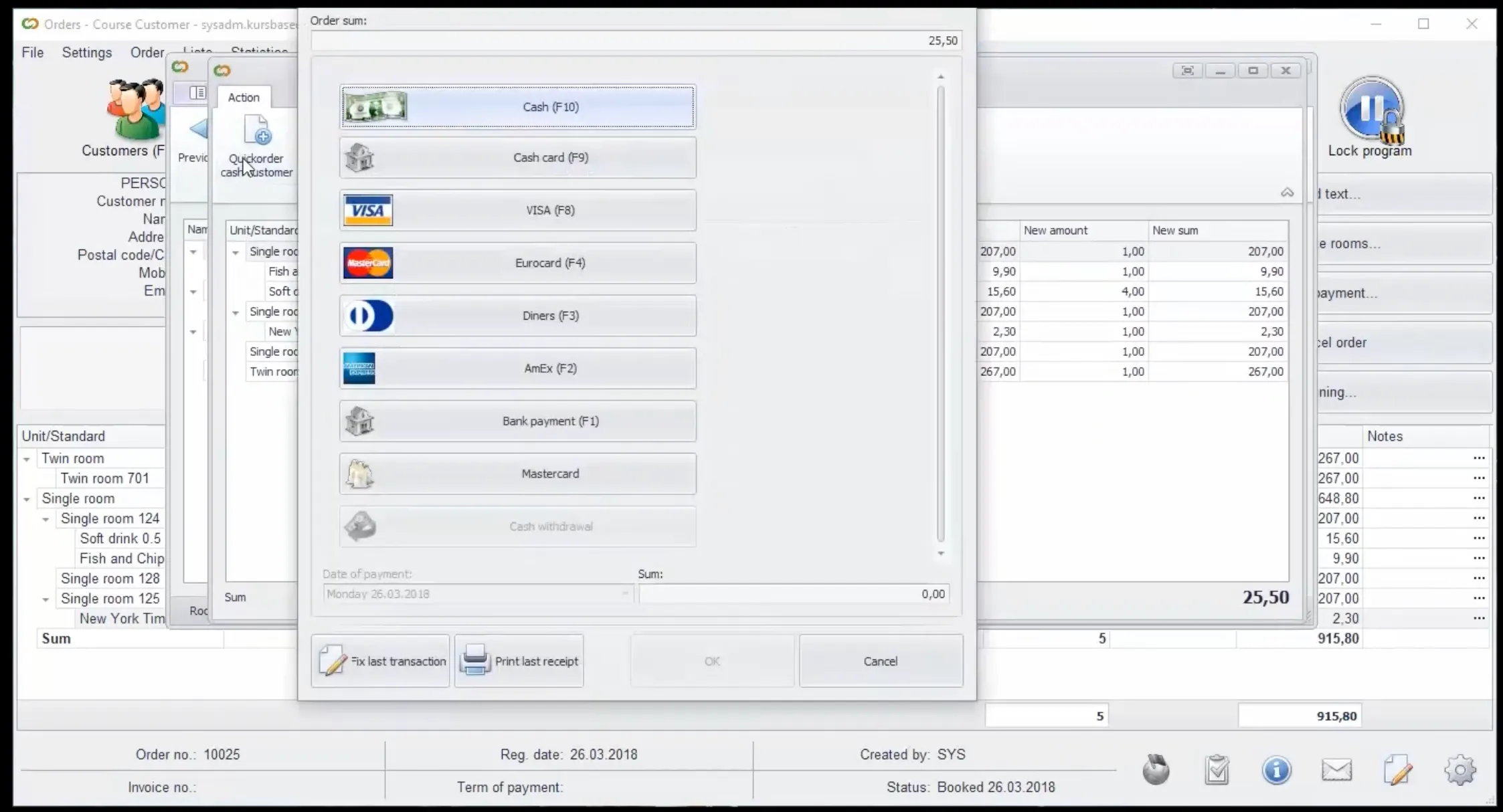
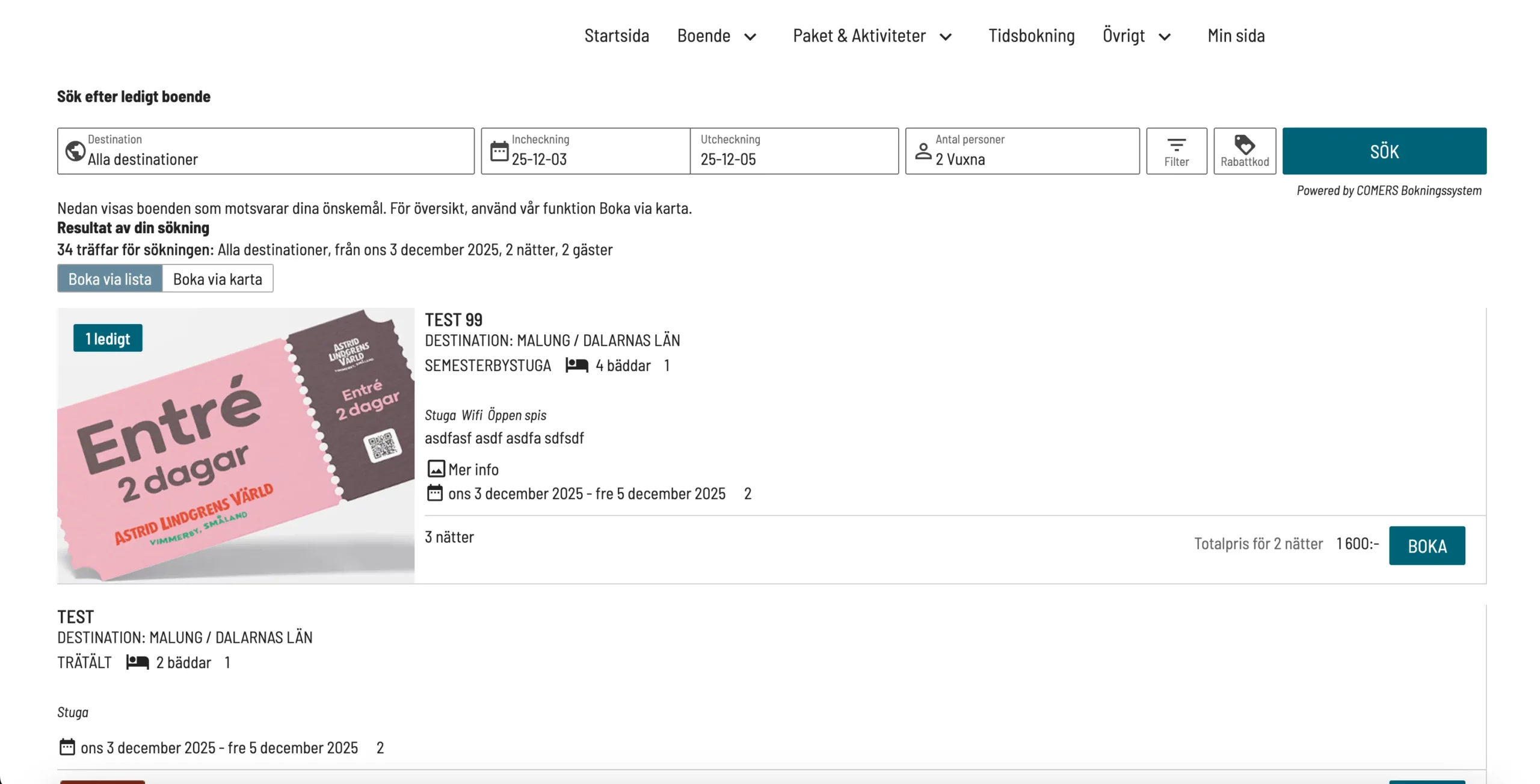
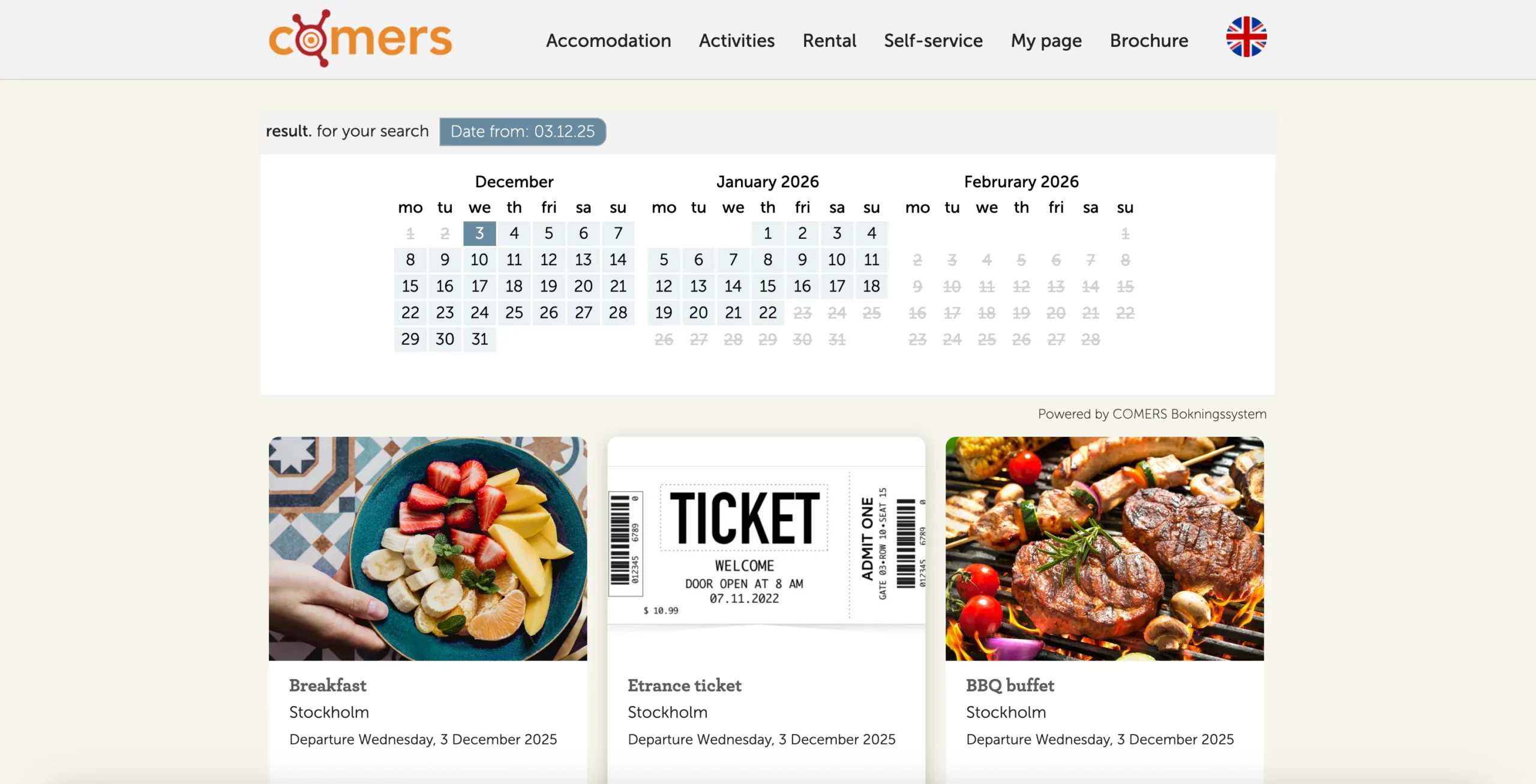
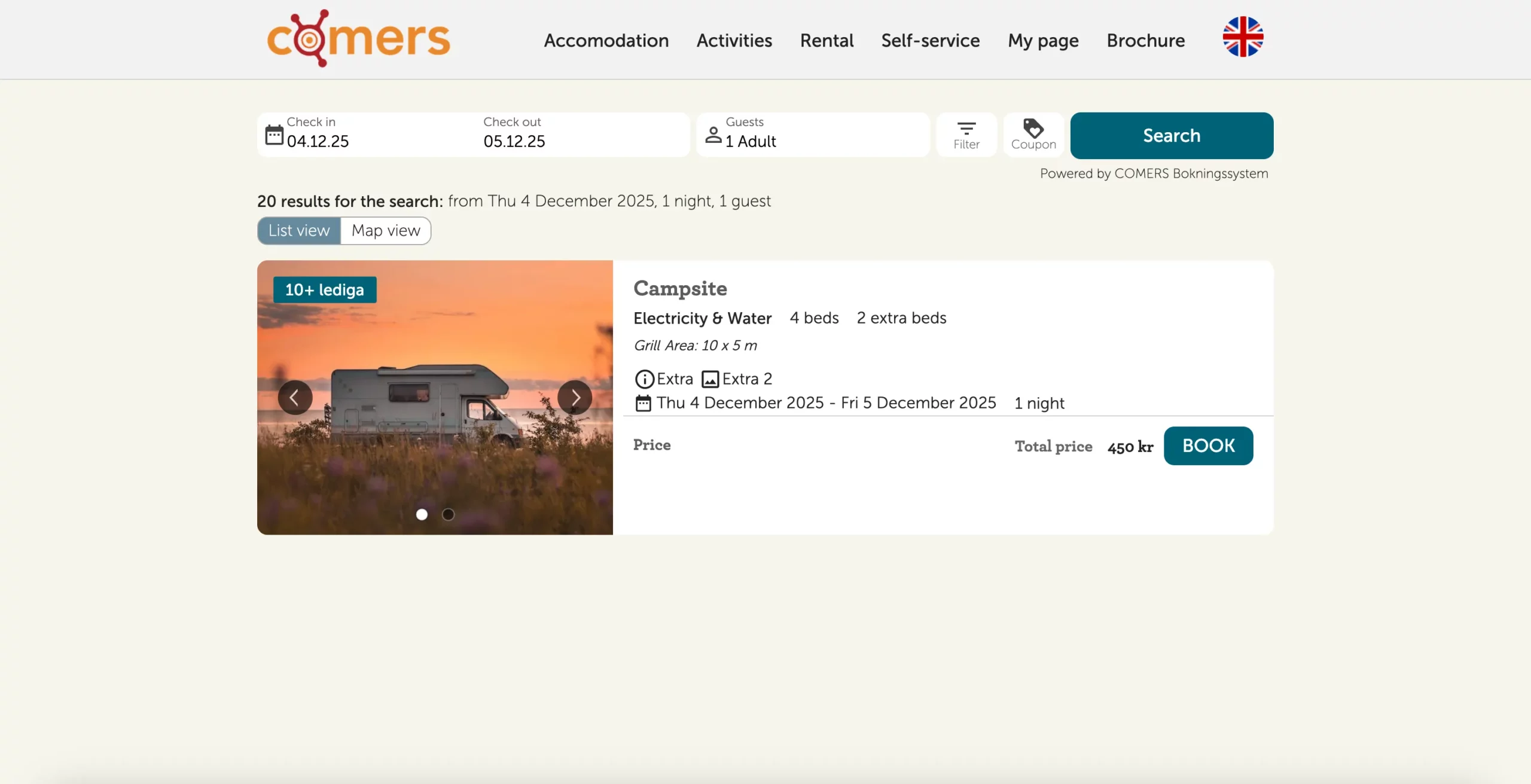
A web-based booking platform originally built for broad use in the travel industry. Comer's functionality includes website and online booking for guests, online payment, invoicing, administrative back office and statistics. Thanks to its background, the system can handle both simple room bookings and more complex packages and activities. Comers can be customised for different industries: hotels and conferences, campsites, tour operators, ski resorts, etc. On the hotel side, this means that Comers can manage rooms, cabins and additional services in the same system. The integration with Trivec's POS system also supports restaurant bills and payments. Overall, Comers is aimed at businesses looking for a flexible platform rather than just a traditional hotel PMS.
Clock PMS+
Clock PMS+ differs from many others in its philosophy of building as much as possible directly into the core system. Instead of relying on third-party integrations for everything, Clock has built-in booking engine (WBE), gift card management, conference booking, and a simpler point of sale (POS) system. Their biggest focus is on the guest journey and automation. The system is built to allow guests to do as much as possible themselves via their mobile phones - from check-in and room selection to payment and check-out - freeing up time for reception.
Mews
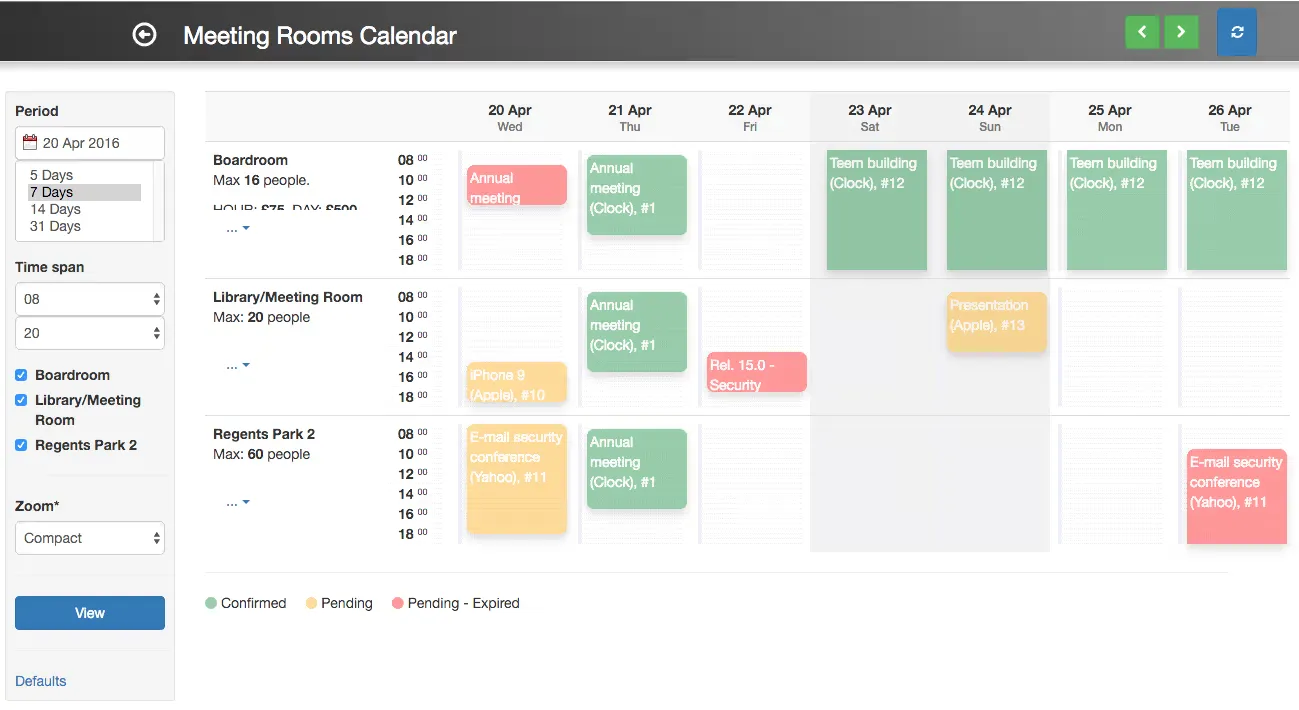
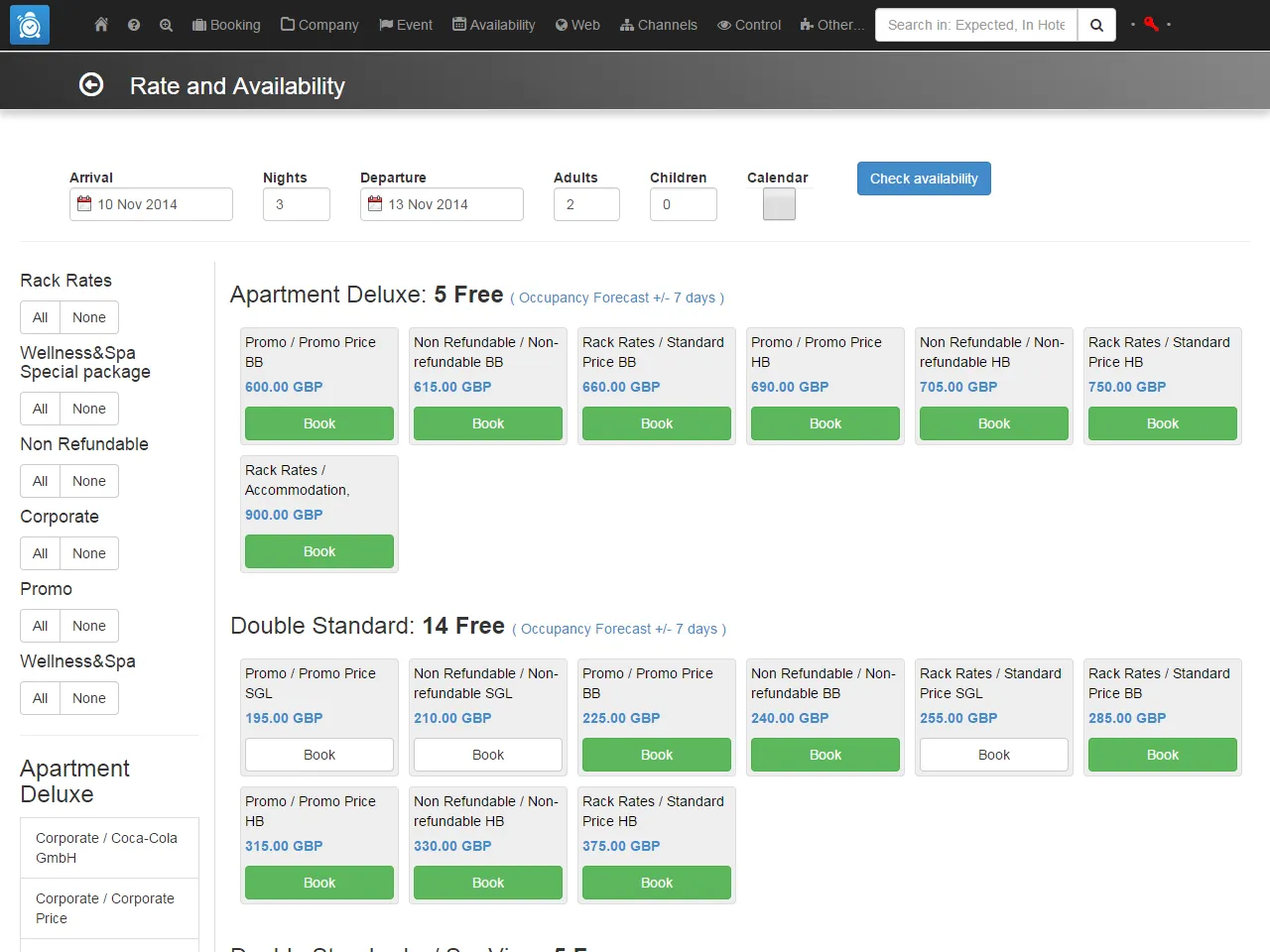
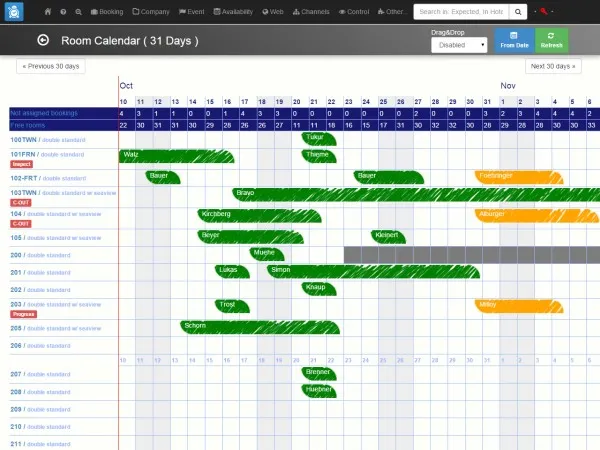
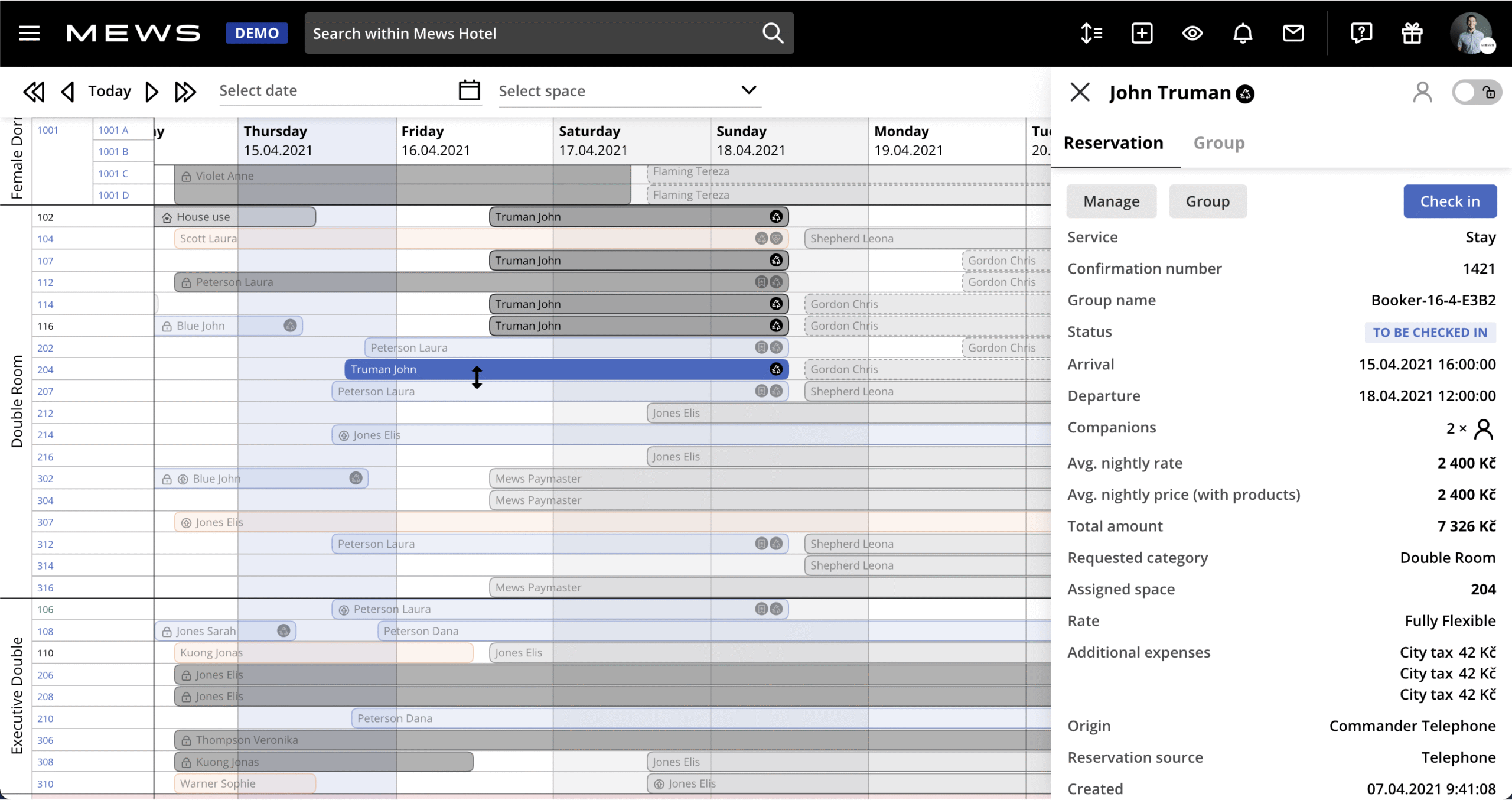
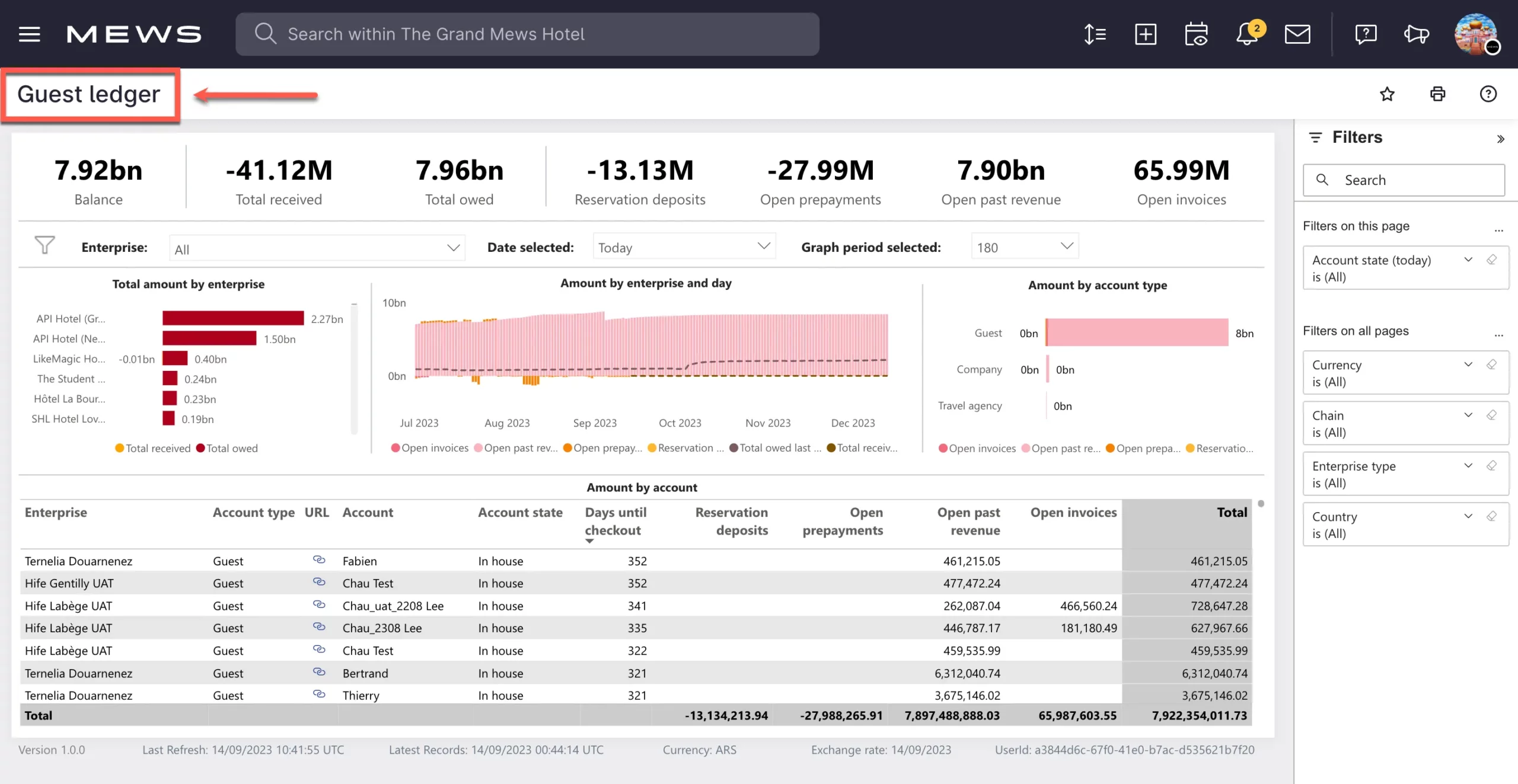
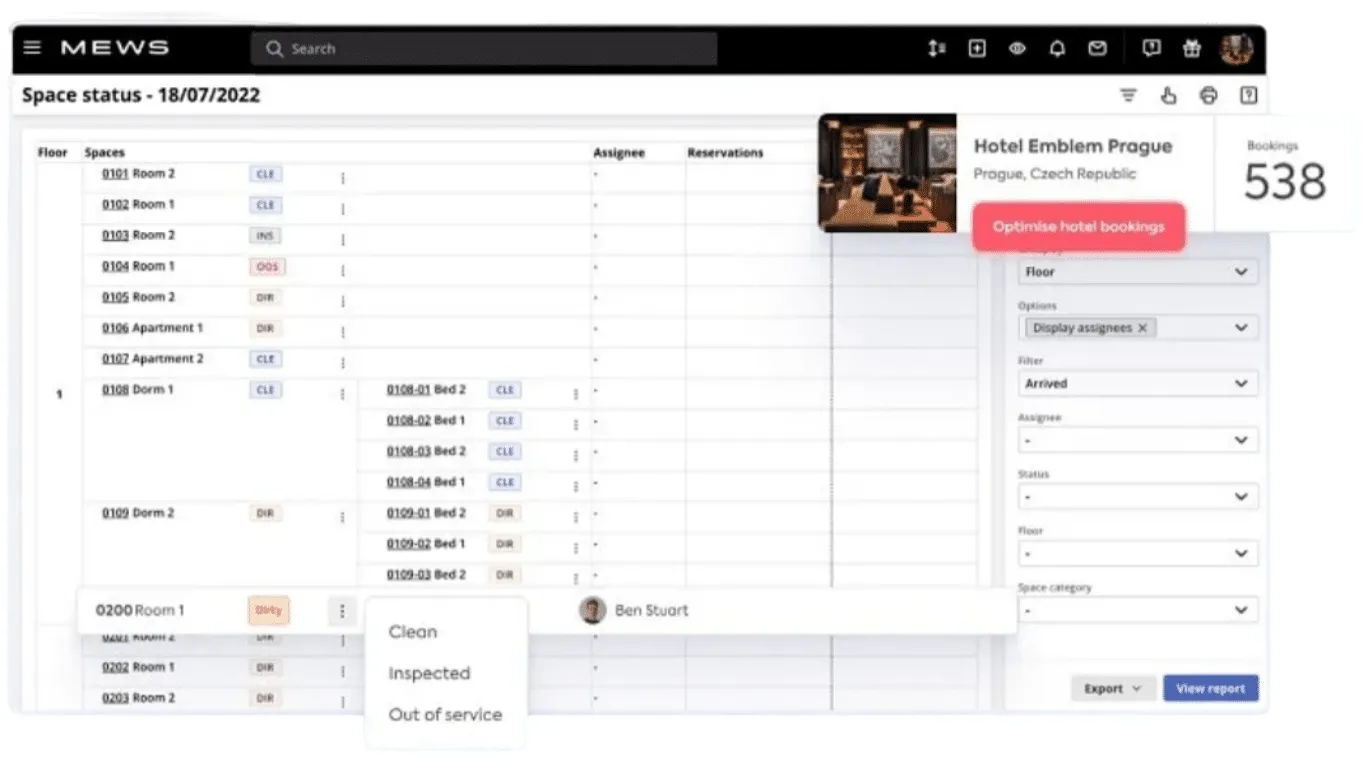
A more modern one, cloud-native PMS with a focus on automation and open integration. The core of Mews is room booking, check-in and check-out, billing and payments - all managed through a cloud platform accessed in a browser or mobile. What makes Mews unique is its open API and ecosystem of integrations: the hotel can connect hundreds of external apps for everything from revenue management and keyless door locking systems to guest apps. Mews also has its own in-built booking engine for direct bookings and a concierge app for guests (self-service via mobile). The system is designed with a streamlined, minimalist design and emphasises real-time updating of all data. It is mainly targeted at hotels and chains that value innovative technology and want to automate many workflows - e.g. self-check-in, automatic card debit and dynamic pricing.
HotSoft
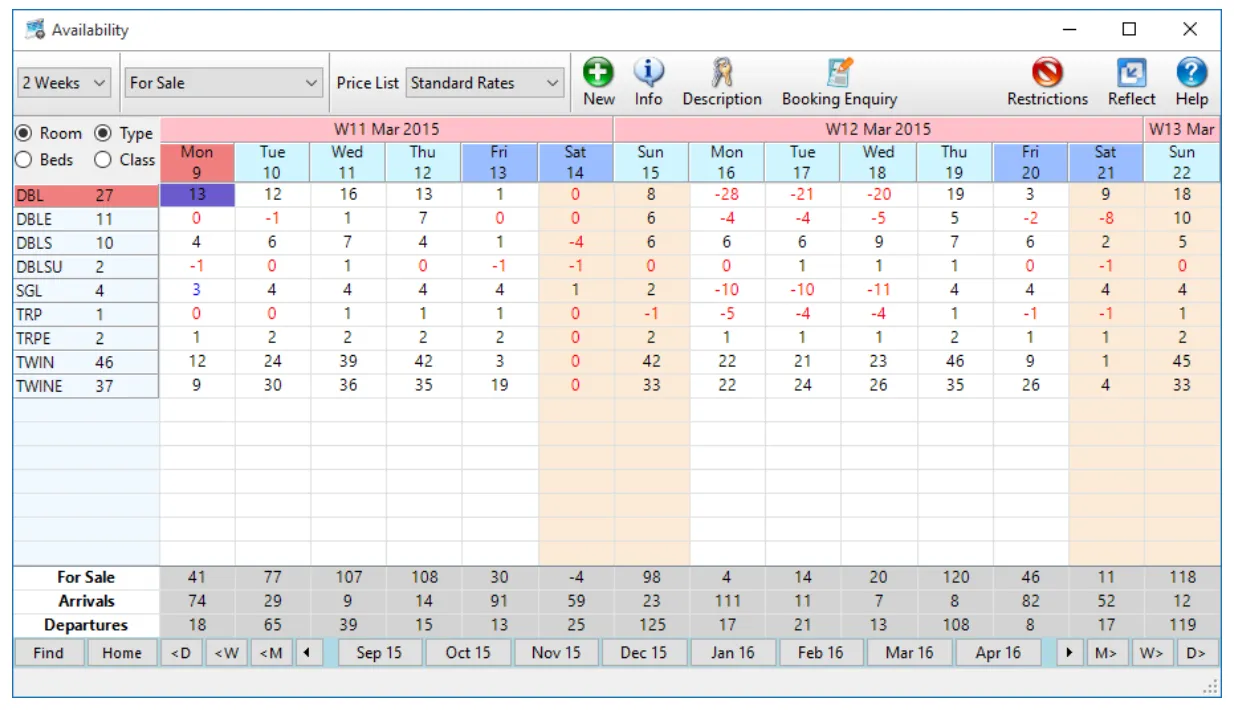
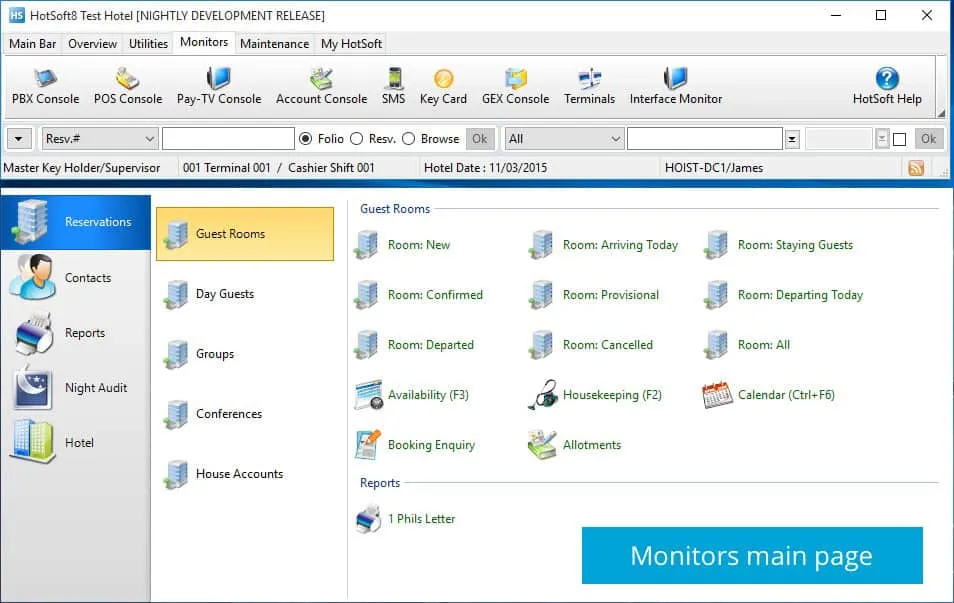
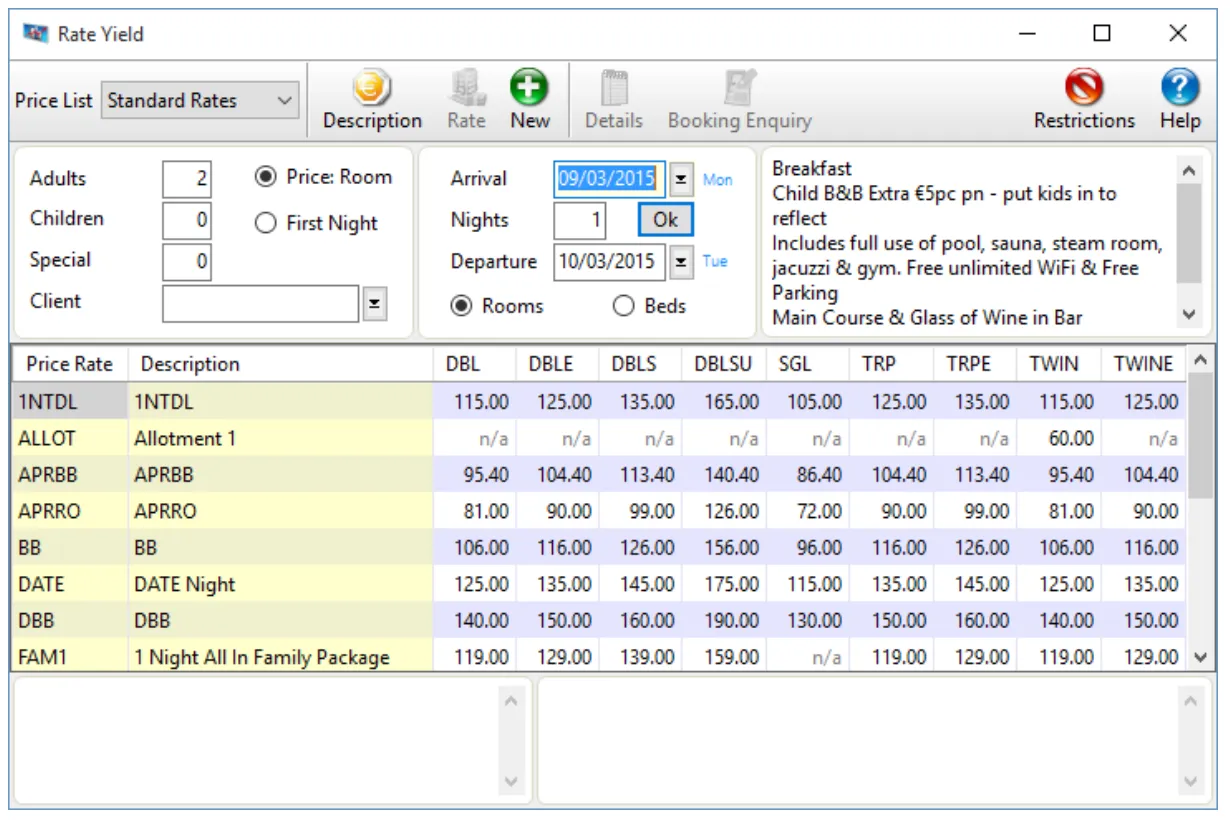
A modular PMS where hotels can choose the parts they need. HotSoft 8 consists of up to a dozen modules, including Front Office (reception/room management), Conference & Events, Spa & Activities, Sales & Marketing (CRM functions), Back Office (finance/reporting), Allotment/Property Owner (for resort ownership model) and integrated POS for restaurants. It is possible to run the whole package or just selected modules, providing flexibility for different types of establishments. The system can run locally installed or in the cloud via Hoists/Planets hosting. HotSoft is known to cover the needs of classic hotels with conference and spa departments, where you need everything from room booking to activity planning. Typical customers are medium-sized hotels, resorts and chains in Europe that want a reliable, proven solution with many features under one roof.
Oracle Opera
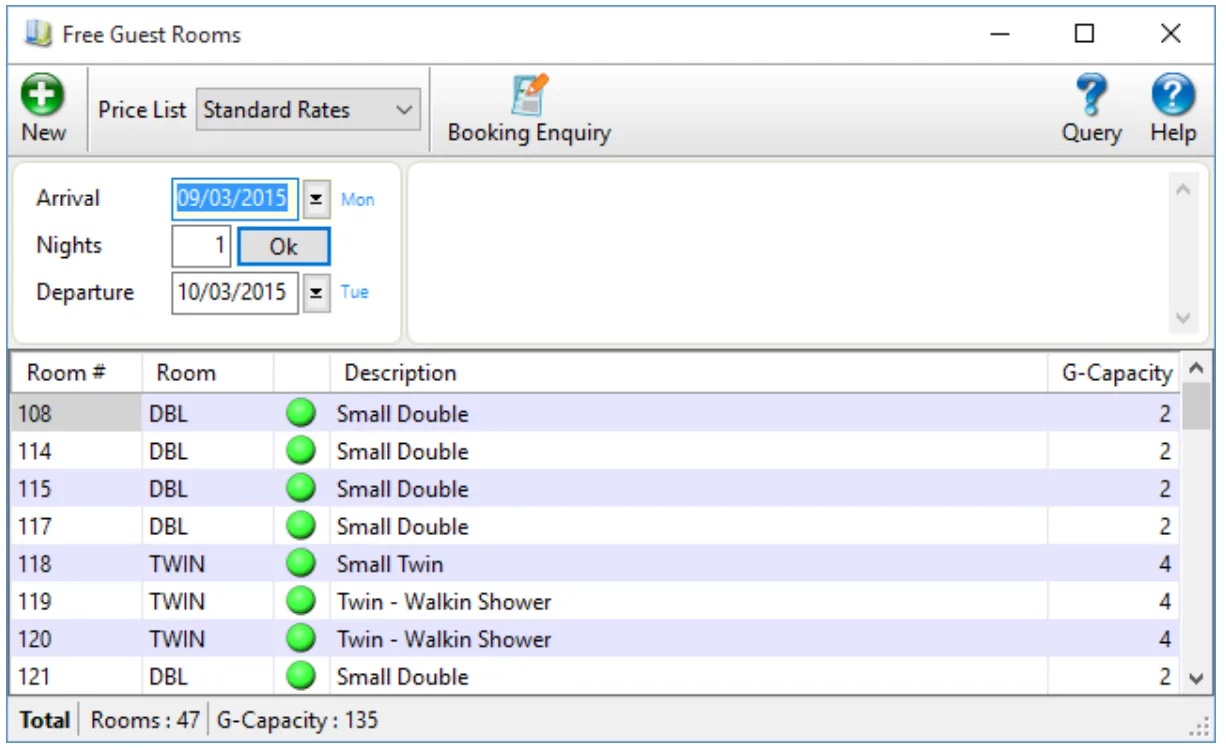
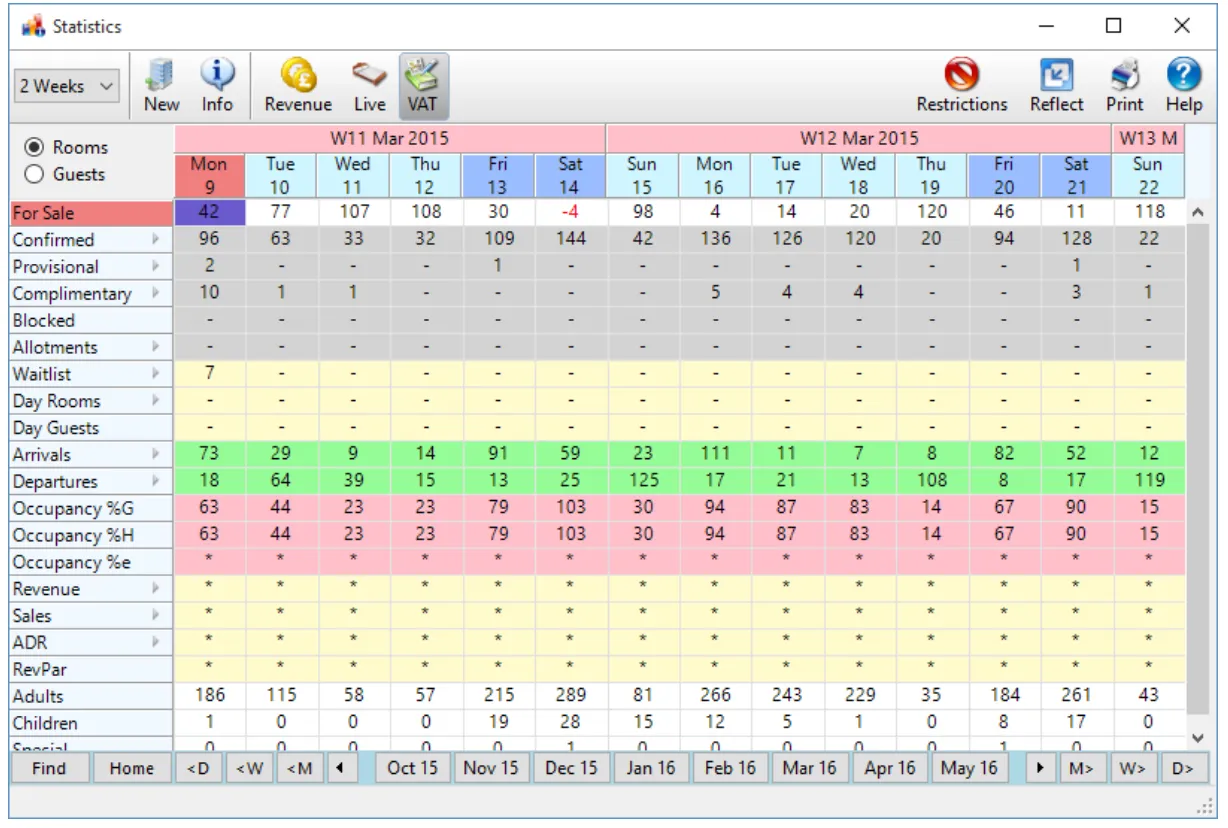
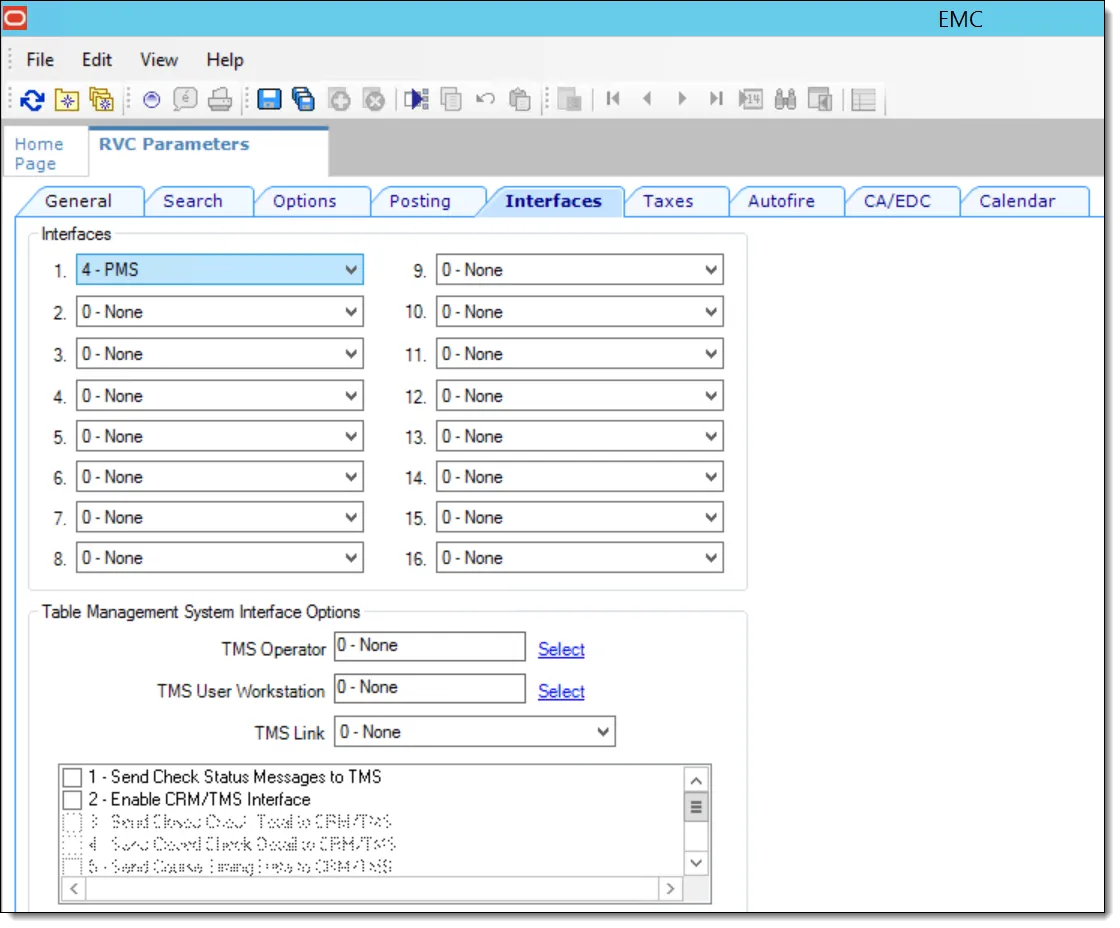
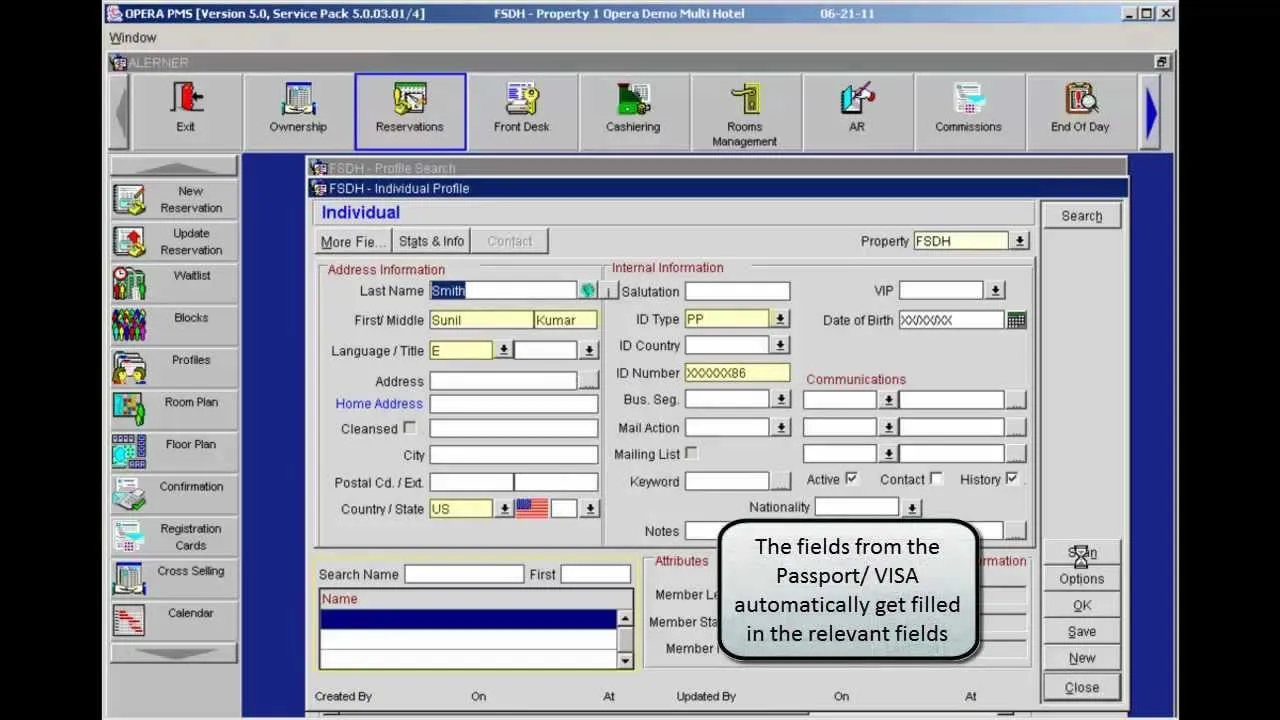
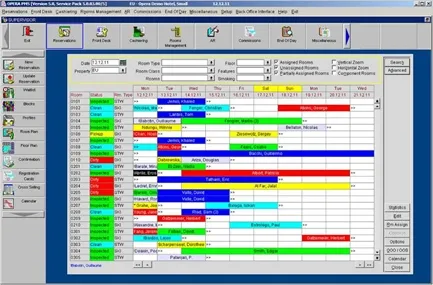
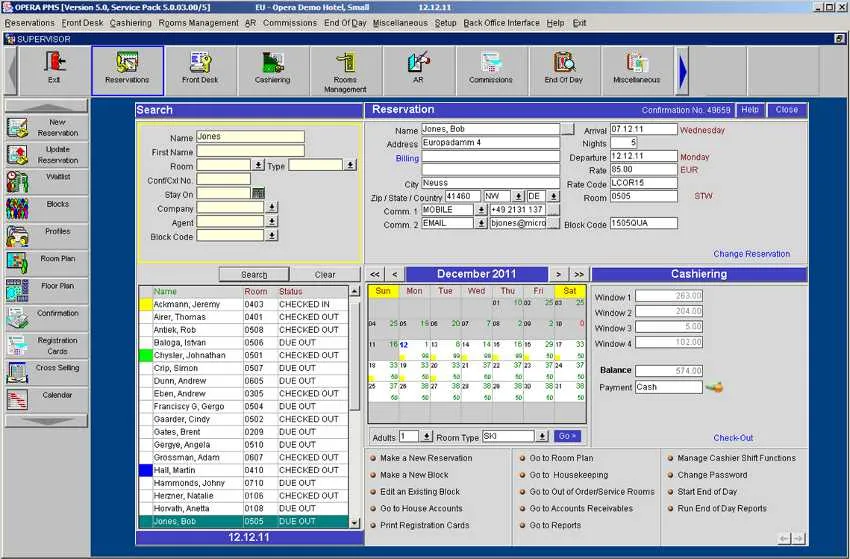
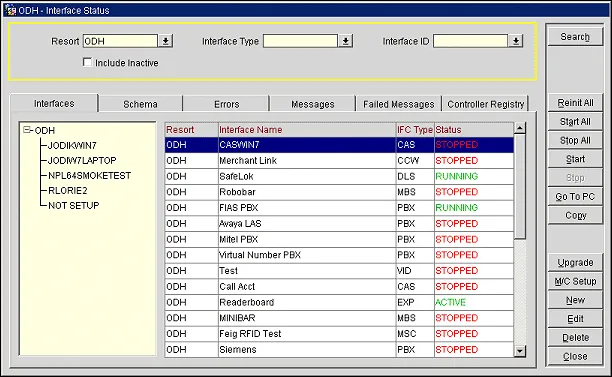
A feature-rich enterprise solution. Opera PMS manages all aspects of hotel operations: room booking, groups & conferences, loyalty programmes, revenue management, housekeeping & maintenance, guest profile management, and much more. Opera is often integrated with Oracle's other systems, such as central reservation systems (CRS), spa systems or point-of-sale systems, for a complete solution for large hotels. Opera is available as a traditional on-premise installation (Opera 5) and as Opera Cloud in Oracle Cloud infrastructure. The system is highly customisable but requires expertise for installation and operation. The target audience is large luxury hotels, casino hotels, all-inclusive resorts and chains that need robust centralised control and may already be using the Oracle ecosystem. Opera is fundamentally built to handle complexity in large organisations rather than being a simple tool for the small hotel.
Sirvoy
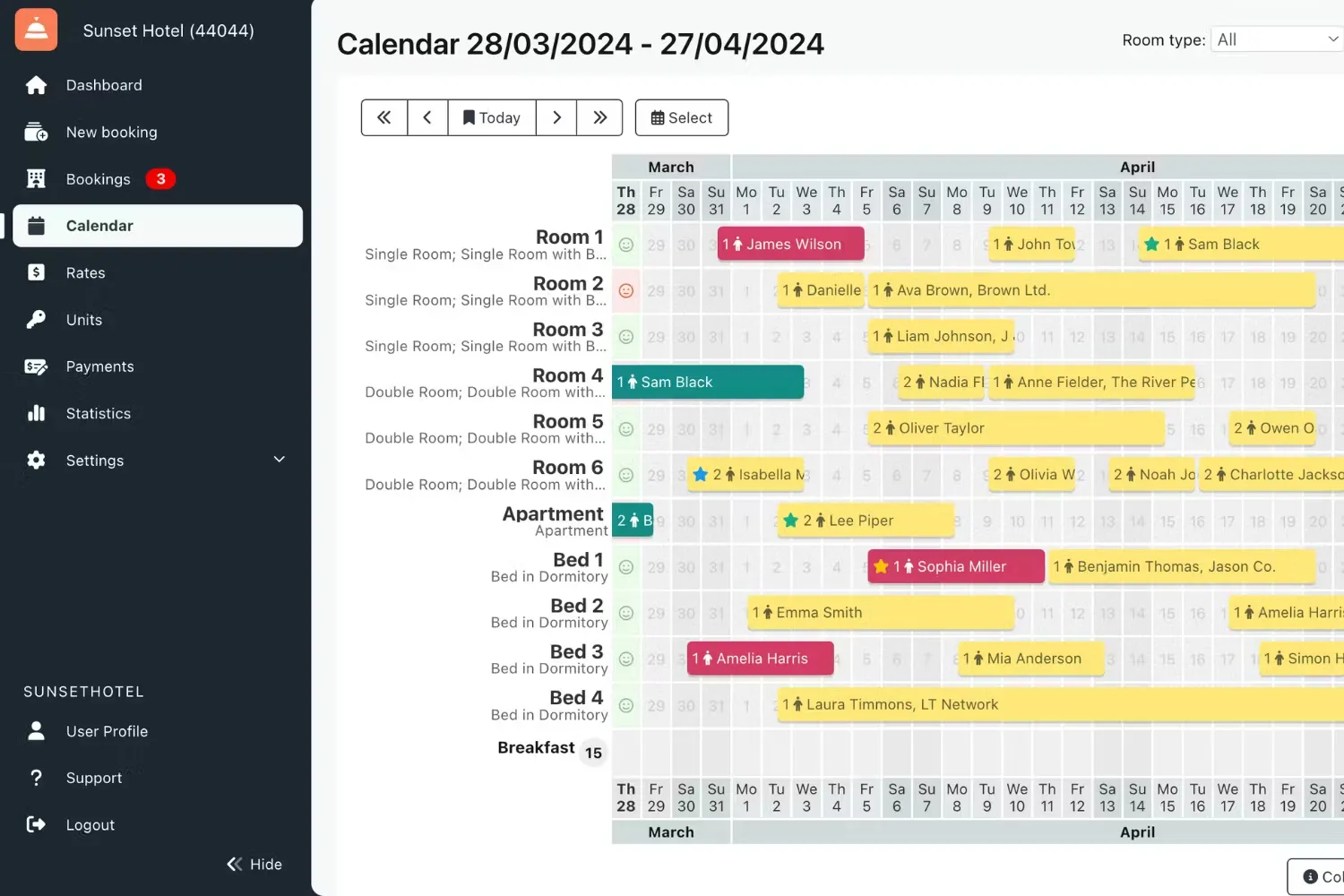
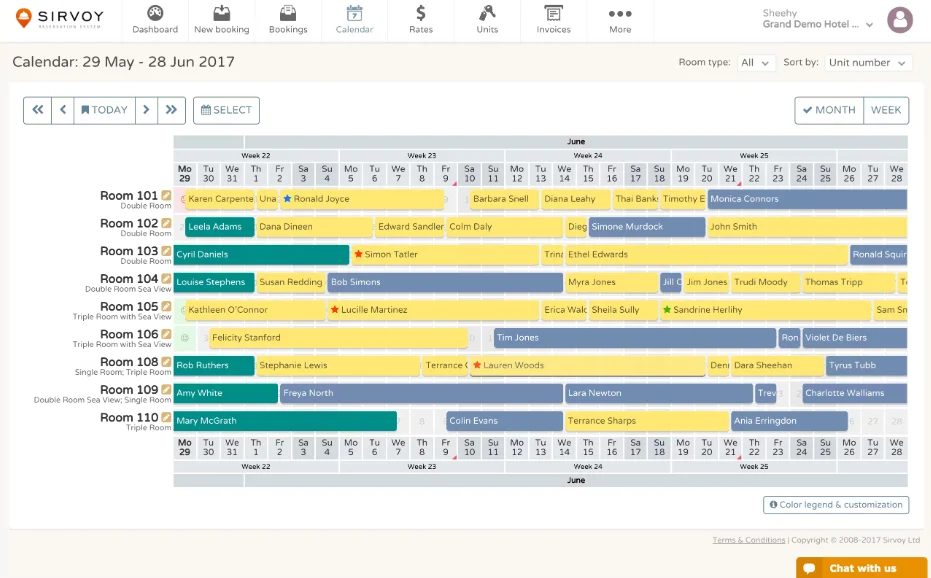
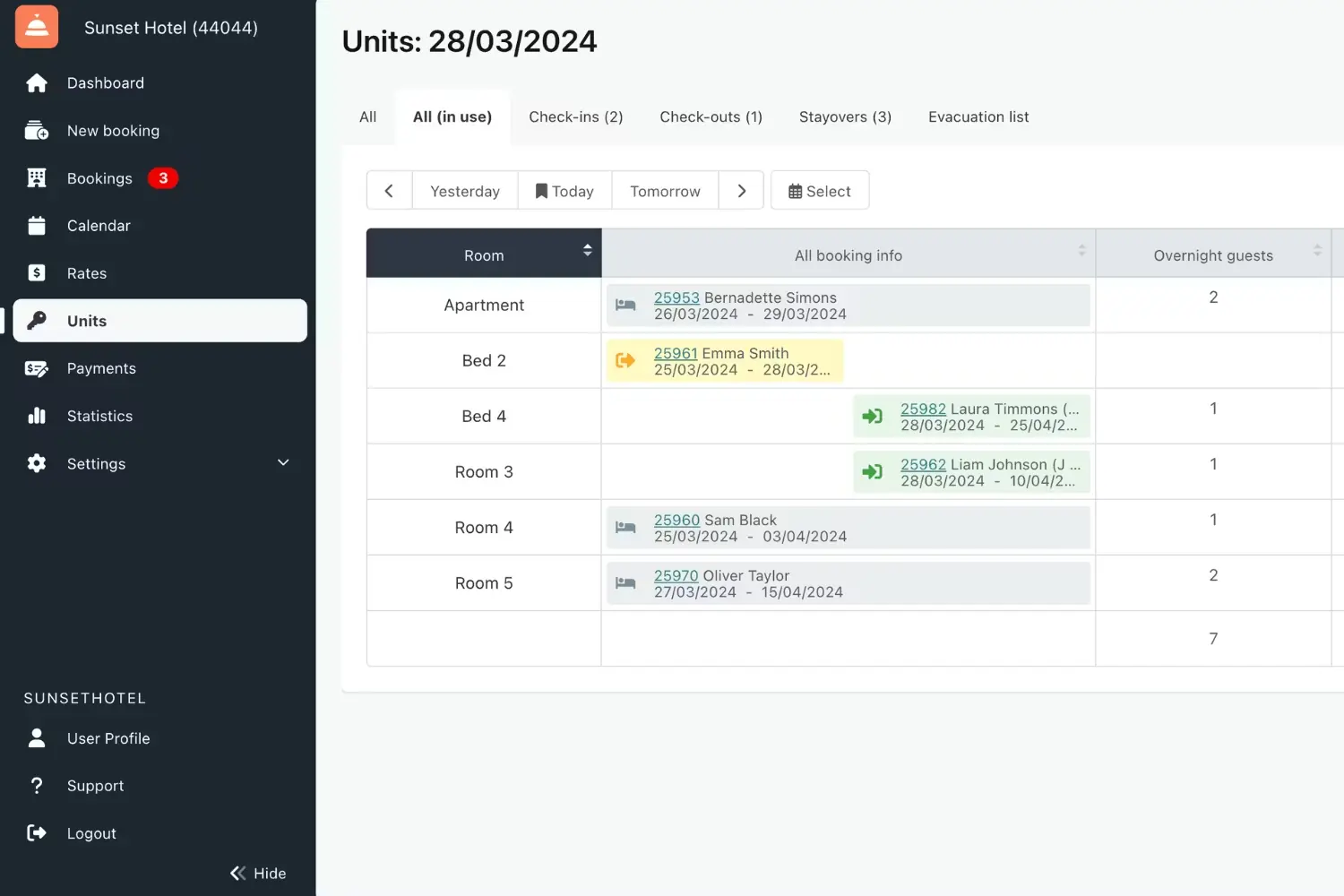
A hotel PMS that includes the essentials for small accommodations. Sirvoy offers a clear booking calendar, check-in and check-out, room and guest management, and billing in an easy-to-use web interface. The big selling point is that the system has a built-in booking engine for your own website and a channel manager to connect to Booking.com, Airbnb and others in real time - without extra commission on the bookings. Sirvoy is completely cloud-based and requires minimal technical knowledge; many users get started on their own via a free trial. The functionality covers the basic needs, but things like advanced price optimisation, conference module or POS are missing (the focus is on accommodation, not food & beverage). Therefore, Sirvoy is best suited for smaller hotels, guesthouses, B&Bs, aparthotels or campsites/glamping sites that want a cost-effective and easy-to-manage system.
Strengths of each system
Here we highlight what each supplier does best - things that can be crucial to making the system fit your business.
- Lyra: Total solution, modern technology for Nordic reality. Lyra's great strength is that the platform is built as a coherent system from the start - PMS, POS, booking engine, CRM, dynamic pricing and reporting are all connected in the same environment. This makes life easier for staff, who work in a unified interface instead of jumping between different programmes. Lyra is developed with a focus on hotels, campsites and resorts, supporting everything from classic hotel rooms to camping pitches and cottages. Thanks to its modern architecture, the system is fast, scales well as the business grows and allows for a high degree of automation (e.g. payment flows, communication, pricing logic). Compared to other providers, this means fewer systems to keep track of, less manual administration and a more cohesive guest journey.
- VisBook: Wide functionality for established establishments. VisBook has been on the Nordic market for a long time and offers a comprehensive PMS with modules for accommodation, conference, spa and restaurant, among others. The system is particularly suitable for businesses that appreciate a feature-rich tool with a lot that can be configured over time. VisBook has a good spread among both hotels and campsites, and many appreciate that there is a developed flora of integrations with external systems such as keys, payment solutions and channel managers. For organisations already used to more traditional hotel and campsite systems, VisBook can be perceived as a safe choice, although its complexity also means that it sometimes requires more training and ongoing management.
- Comers: Flexibility for accommodation combined with activities. Comers profiles itself as a booking system that can handle many different business models - camping, holiday villages, hotels, activities and packages in the same environment. Its strength lies in its flexibility: establishments that want to sell accommodation together with, for example, lift passes, rentals or guided tours can build logic for this in Comers. The system is web-based and accessed via a web browser, simplifying the work of staff in multiple locations. Comers is often used by establishments that want to offer packages and online booking in a single solution, but it also requires that the organisation is prepared to spend some time setting up the structure to reflect their particular model.
- Clock PMS+: Automated guest journey with all in one. Clock's great strength is the philosophy of gathering as much as possible - booking engine, checkout, conference and housekeeping - in a single platform to minimise the need for external connections. The system is particularly strong on guest communication and self-service, where the guest can easily check in and pay via mobile phone without hassle. And because the system is cloud-based from the ground up, it works on tablets, giving staff the freedom to meet guests in the lobby instead of being locked behind a reception desk.
- Mews: Automation and open ecosystem. Mews is a cloud-based PMS that focuses on automated flows - such as online check-in, self-generated payments and smooth management of returning guests. The system often appeals to more technology-driven hotels that want to work with digital key management, self-service and a high degree of integration. One of the clearest strengths is in Mews Marketplace and their open API, where many third-party solutions can be connected. For organisations that prioritise integrations and automatic management of standard flows, Mews can be an option - at the same time, the strong dependence on external modules means that you need to have a clear integration strategy internally.
- HotSoft: Proven system for classic hotel environments. HotSoft has long been established in the hotel industry and is used by everything from smaller hotels to larger facilities with conference, spa and timeshare-like arrangements. Its strength lies in the fact that the system is well-proven and has deep functionality within traditional hotel processes. Inherited from Hoist Group, there are also established integrations with, for example, door locks, TV and telephony. For organisations that want a PMS that follows a more classic hotel structure and where you already work a lot with these parts, HotSoft can be perceived as stable - but interfaces and working methods can feel more traditional compared to newer, cloud-built platforms.
- Oracle Opera: Scalability for international chains. Oracle Opera is a global PMS solution widely used by large hotel chains and complex facilities. It is designed to handle multiple devices, advanced rights management and centralised reporting. Its strength lies in the fact that Opera can be adapted to a variety of processes and policies, which suits chains that need a standardised approach across many countries. For smaller operators, the scale can be cumbersome, but for large chains, Opera often becomes part of a larger IT architecture with centralised systems for revenue management, loyalty and reporting.
- Sirvoy: Simplicity and affordability for smaller businesses. Sirvoy focuses on smaller hotels, guesthouses and B&Bs where you want to get started quickly without high costs. The system is relatively easy to learn, with a focus on clear flows for booking, online booking and channel management. The pricing structure is often appreciated by smaller businesses that want to control the monthly cost. Sirvoy is therefore mainly suited to those who prioritise simplicity and a smooth basic flow, rather than advanced special functionality or a comprehensive platform for all parts of the business.
Weaknesses and limitations
Here we highlight some of the challenges or limitations that each PMS may have. These weaknesses are important to know so that you can weigh the pros and cons based on your own organisation's needs.
- Lyra: As Lyra is a new player, its biggest weakness may be the lack of a long history and references compared to older systems. Some hotel managers may be hesitant to switch to a relatively untested platform, even if it seems technically superior. The functionality of Lyra is broad, but as a new end-to-end solution on the market, there may be some specialised features that have not yet been built out or refined to the same extent as more mature systems. For example, if your hotel has very complex, unique work processes, Lyra may need to be customised. On the other hand, Lyra is evolving rapidly, but you should be aware that as an early adopter, you may encounter the need for improvements, but also have a say in the product's development.
- VisBook: Some users find that VisBooks' wealth of features comes with a trade-off: the system can be very complex to learn and navigate. The rich client programme and all the modules can mean a longer start-up time for staff, compared to more stripped-down systems. The interface has been modernised in recent years, but some parts may feel outdated or cluttered as they have been built out gradually over many years. Another possible limitation is cost - VisBook does not have a public fixed price list, but quotes each customer, which can mean higher prices for smaller organisations that do not use the full functionality. Finally, although VisBook is now cloud-based, there are still dependencies on legacy client solutions for some functions, which can be a barrier for those who want to manage all 100% in the browser.
- Comers: As a relatively niche system (with only around seventy customers), Comers may be perceived as less standardised and therefore less 'proven' in a broad sense. It may be more difficult to find industry support, independent consultants or colleagues in the industry who know Comers, compared to more widespread systems. Another weakness is that Comers, with its focus on being flexible for different industries, may not have all the deep specialised features that a hotel with very specific needs might want. For example, it can handle conference bookings and activities, but it is not as specialised in conferencing as dedicated conferencing systems - there is sometimes a trade-off when one system has to fit 'everything'. Integrations with third parties may also be fewer outside of the Trivec sphere, which can limit freedom of choice if you want to use many external services. Finally, the smaller size of the company may mean that the pace of development is slower and that some new industry trends are not supported immediately but only when the customer base demands it.
- Clock PMS+: The extensive functionality can sometimes be a barrier; new users often find the interface clunky and it takes time to learn how to navigate all the menu options compared to more stripped-down systems. Although the reporting tool is flexible, it is considered by some to be cumbersome to configure without expert knowledge. Finally, the design of the guest interface (e.g. for online booking) is functional but not always perceived as aesthetically polished as some more design-focused competitors.
- Mews: Despite its more modern interface than others, Mews can have a relatively high learning curve for some users (and it is, after all, already 14 years old), especially those used to more traditional Swedish systems. The interface is minimalistic and in English, which can be a challenge for staff who prefer everything in Swedish. Another aspect is that Mews, as a global solution, does not always have built-in localisation for e.g. Swedish accounting standards or specific tax modules - this has to be solved through integrations or manual procedures. Some smaller hotels may find that the Mews business model with different modules and possible transaction fees (e.g. for the Mews Payments solution) is more expensive than a simpler fixed price system. Mews' philosophy of relying on integrations means that if you don't actively utilise these integrations, some functionality may be missing directly from the system (e.g. advanced channel management or revenue management requires additional tools). In short, Mews is not for everyone - for those who want "everything in one system" without putting the pieces together themselves, Mews can feel thin by default, while it only blossoms when you plug in more external services.
- HotSoft: The long history and scope of HotSoft means that some parts of the system can feel dated. The user interface in HotSoft 8 is not as modern or web-based as newer competitors - for example, some configuration and reporting tools are standalone applications that do not run in the browser. It also means that mobile access is limited; staff need to be at a computer with the programme to make changes (although some web functionality is available for the booking engine and reports). Another weakness is that HotSoft, because of its modular design, can be costly if you need many modules - each add-on (such as conference module, spa module, etc.Integrations with third-party products exist, but are sometimes locked to Hoist/Planet's own solutions or partners, which can give less freedom of choice (e.g. you may have to use Planet Pay for payments for best integration). In addition, HotSoft is known to require some training; new users may find the system less intuitive until they learn the terminology and flows. For smaller businesses with scarce IT resources, this can be a threshold.
- Oracle Opera: Opera is a great system but that is also its weakness for many. Implementing Opera can be an extensive process - it often requires consultants, training periods and a lot of customisation to work optimally for a specific hotel. The costs are typically very high: licence fees, maintenance contracts, consultancy costs and, if Opera Cloud is chosen, the subscription cost is significant. For a stand-alone medium-sized hotel, Opera is usually oversized both in terms of functionality and price. Also, as Opera has long been available in a Windows environment, it has never been known for being beautiful or easy to use; staff have to undergo solid training to become effective users (the interface is not as intuitive as newer web PMSes). Although Opera Cloud has improved the user experience somewhat, there is still criticism that the system feels "old" in thinking. Another limitation may be that Opera traditionally does not give up data or integrations easily - historically, it has required expensive interfaces to connect external systems. In an era where open APIs are valued, Opera can be perceived as a closed system. In summary, Opera is great for large organisations, but it can be over-complicated and inflexible for smaller players.
- Sirvoy: Sirvoy's simplicity is also its limitation in some respects. For a larger hotel or a business with complex needs, Sirvoy can feel too basic. It lacks advanced features such as package booking (combining rooms with activities in one transaction), built-in support for conference/group events, or in-depth analytical tools - things that larger hotels may require. Although Sirvoy can integrate with some external systems (e.g. key cards via Zaplox, some POS systems, etc.), the ecosystem is not as comprehensive as its competitors. Another weakness is that the system is not multi-layered for different roles: in a large hotel you might want different authorisation levels, logs per user, and more advanced security - Sirvoy is more of a "small team" system and lacks some administration tools for HR/role management. Finally, although support is 24/7, Sirvoy doesn't have a physical consultant network that comes out and helps on site; all help is online. For the tech-savvy, not having a dedicated contact person to call in case of need for deeper consultation can feel unsafe. These limitations mean that Sirvoy should be considered primarily by smaller and medium-sized independent living facilities rather than larger establishments with specialised requirements.
Which PMS system should you choose?
The "best" system will always depend on the type of business you run and your specific needs. Below we provide some guidelines and suggestions based on different types of hotel and tourism establishments - each with its own strengths for that particular type of business.
Large hotels & hotel chains
For larger city centre hotels, resorts or chains with high central control requirements Oracle Opera often a natural choice. Opera is the industry standard among many international chains thanks to its robustness and extensive functionality. If your chain needs centralised guest data, loyalty programmes and global distribution, Opera is hard to beat. Meanwhile, modern alternatives have gained ground: Mews has proven its ability to manage chain operations, including through its work with Nordic hotel chains that value cloud-based agility. Mews could be a good choice for larger operators looking to modernise the experience and benefit from automation at scale. Note that also Lyra designed to scale up to chains; if you want to be early with an all-in-one solution that can be rolled out across many shared platform sites, Lyra could be worth considering for a modern chain that dares to break new ground.
Medium-sized stand-alone city hotels
For an independent city centre hotel with perhaps 50-150 rooms, conference facilities and its own restaurant, there are several good options. VisBook can be attractive for such a hotel - it provides a complete tool that manages both accommodation, conference and F&B (Food & Beverage) in one solution, with local support and a Nordic supplier. If the hotel has a profile that emphasises innovative guest service Mews be a choice; guests in urban environments often appreciate the option of e.g. keyless check-in and mobile concierge that Mews enables. If the focus is instead on keeping costs down and having easy operation for the hotel can Lyra fit - you get a lot of functionality built in without having to buy external systems, and the ease of use makes it easier for staff to manage different tasks efficiently. Clock PMS+ should also be mentioned as a candidate for medium-sized city hotels and boutique establishments that want to fully digitise the guest journey.
Boutique hotels & B&Bs
Smaller, personalised hotels, boutique hotels and bed & breakfasts need a PMS that is simple in its day-to-day operation but powerful enough to support growth. Here's how Lyra often the most future-proof choice. Lyra offers a customised solution for B&Bs where the booking engine, PMS, POS and guest communication are all connected in the same platform - reducing administration and making it easier to give guests a personalised experience. For businesses that are primarily looking for a very stripped-down, low-cost option Sirvoy be an option, especially if the needs are very simple. VisBook may be suitable in cases where a smaller hotel is already working with spa, conference or more advanced packages, but probably needs to be prepared for a higher cost and more complex user experience. For most boutique hotels and B&Bs looking to combine simplicity today with the ability to grow tomorrow, Lyra is a strong first choice.
Hostels & Hostels
Hostels and hostels often have many beds per room, a lot of self-check-in and check-out, and a digitally savvy guest community. Here are Lyra particularly interesting for organisations that want to move towards more automation and self-service. With a cloud-based platform and adapted for hostels Lyra can manage bed sales, self-check-in, payment flows and any sales in the café/bar in a coherent system - something that simplifies everyday life for both staff and guests. Sirvoy is an option for hostels that primarily need a simple PMS and channel manager. Mews may be relevant for larger or more internationally orientated hostels that want a highly integration-driven ecosystem. However, for most independent hostels in the Nordics that want to combine modern guest journey, automation, and the ability to build on more features over time, Lyra is a natural main track.
Larger campsites & holiday parks
A campsite with hundreds of pitches, chalets, activities and perhaps shops/restaurants requires a system specialised in camping activities. VisBook may be worth considering here - it was born out of the needs of a campsite and can handle campsite-specific things such as seasonal pitches, electricity metering, map booking of plots, etc. VisBook is currently used by many large campsites in the Nordic countries. Also Comers is relevant: Comers has dedicated solutions for camping where everything from online booking of camping pitches to ski instructions and bike hire can be managed. For a campsite that also has hotel chalets, water parks or similar on site, the flexibility of Comers can be invaluable. Lyra should also be mentioned for this category - as the first new platform in a long time with a strong focus on camping, Lyra is designed to manage the entire guest journey digital on campsites (including kiosk sales, rentals and guest portal for check-in). If the camping company values a modern user experience with everything in one system, Lyra could be a future-oriented choice. In summary: VisBook provides security and breadth, Comers provides adaptability for complex holiday resorts, and Lyra provides a new end-to-end solution with modern technology and 24/7 support.
Small campsites & glamping
For smaller campsites, glamping sites and farm stays with a limited number of pitches, it is especially important to have a system that is easy to work in, yet powerful enough to handle seasons, package accommodation types and many channels. Here are the Lyra often the most future-proof choice. Lyra is developed with campsites and glamping in mind, with support for everything from tent sites and pitches to cabins, glamping tents and specialised units - and with a booking engine that can be adapted to both high and low season. You can control pricing by category, period and channel, work with packages (accommodation + optional extras), while keeping checkout, payments and reporting in the same system, reducing administration for small teams. In addition, all channels, hotels, airbnb, booking etc. are also managed from Lyra's own platform. Sirvoy can be an option for the simplest of setups - especially if you mainly want a quick solution for online booking and basic room/space management without more advanced revenue or seasonal tools. VisBook can suit businesses aiming to grow into a larger campsite with many different segments (accommodation, activities, maybe spa or conference), but can feel more comprehensive for a small site. For a pure glamping or smaller campsite that wants to combine simple operations today with good opportunities to grow tomorrow, Lyra is a very strong option: you get a modern platform that handles bookings, pricing and guest travel from the same place, without losing the simplicity of everyday life.
Choosing a PMS system is about matching the size, focus and ambitions of your business with the right provider. Larger hotels need power and scalability, smaller properties need simplicity and support. A chain may prioritise centralisation and security, while an individual entrepreneur may value price and ease of use. By evaluating the options - from industry giants like Opera to new innovators like Lyra - you can choose smartly and invest in a PMS that truly becomes the heart of your business.